

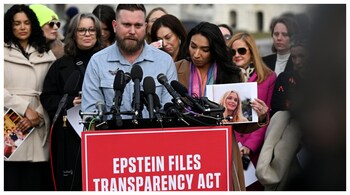
US Congress’s lopsided, bipartisan vote to force the public release of federal records tied to Jeffrey Epstein has set the stage for a remarkable—and contentious—unsealing of documents long kept from view. The House passed the Epstein Files Transparency Act by a 427-1 margin, and the Senate followed with unanimous consent, placing fresh pressure on both the US Justice Department and President Trump, who has said he will sign the bill despite dismissing it as a Democratic “hoax.” What happens next will determine not only how much information becomes public but also how the Justice Department manages the complex mix of victim privacy, ongoing investigations and political optics surrounding the case, the Wall Street Journal reported.
What the Epstein Files Transparency Act actually does
At the heart of the legislation is a sweeping mandate requiring Attorney General Pam Bondi to make unclassified federal records related to Epstein and his associate Ghislaine Maxwell publicly available within 30 days of the bill becoming law. The scope of what must be disclosed is unusually broad. The bill calls for the release of flight logs, FBI interview memos, internal Justice Department communications, personal correspondence, metadata, immunity agreements and any other unclassified documents tied to Epstein’s network. It also requires that the published records be fully searchable and downloadable, a provision aimed at avoiding heavily curated or limited public releases.
Redactions, ongoing probes and the Justice Department’s discretion
Despite this broad mandate, the Justice Department retains significant discretion. The law specifically allows redactions to protect victim identities, personal and medical information, and any images or descriptions involving child sexual abuse. The department may also withhold material that could jeopardize ongoing investigations, and Bondi must explain those redactions in a report to Congress within 15 days of publication. These carve-outs set the stage for potential conflict, especially given that Trump this week ordered a fresh review into Epstein’s connections with certain Democrats—a move that could allow DOJ to classify large portions of material as part of an active probe.
Legal experts say that the department’s flexibility could become a battleground. Stanley Brand, a former House general counsel, noted that the bill “provides a lot of wiggle room” and that courts might ultimately have to resolve disagreements over how broadly DOJ interprets its redaction powers. For now, the department hasn’t commented publicly, and officials have not clarified how they will handle the accelerated timeline.
What proponents hope the public will finally see
Transparency advocates and several lawmakers are focused on one category of documents above all others: FBI memos summarizing interviews with victims from Epstein’s 2019 federal indictment. These documents, supporters say, could reveal the names of people present at Epstein’s events or involved with his network—without exposing any victim’s identity. Critics, however, argue that releasing the names of people who attended Epstein’s social gatherings but committed no crime could lead to unfair reputational damage. “If you showed up at Epstein’s rape island, I don’t have that much sympathy if your name gets released,” said Rep. Ro Khanna, the California Democrat who co-sponsored the bill with Republican Thomas Massie.
A long trail of partial disclosures and political friction
The push for disclosure follows years of partial and often frustrating releases. In February, the Justice Department published a small set of documents that offered little new information, drawing criticism from both parties. In September, lawyers for Epstein’s estate released his “50th birthday book”—a compilation of letters from associates, including one bearing Trump’s signature from 2003. Trump has denied writing it and has repeatedly distanced himself from Epstein, saying they fell out before Epstein’s first arrest. The House Oversight Committee has also posted thousands of pages from the estate in recent months, supplementing court records from civil cases that have already exposed fragments of Epstein’s network.
Even as Congress celebrates its rare bipartisan moment, some lawmakers argue that the legislation is unnecessary. House Speaker Mike Johnson has pointed to the Oversight Committee’s ongoing release of documents, suggesting that Congress already has the tools to increase transparency without new laws. But Khanna and Massie bypassed Johnson using a discharge petition, and the overwhelming vote in both chambers underscores the public demand for answers.
A historical template for forced transparency
There is precedent for what happens next. The 1992 John F. Kennedy Records Act required the phased release of assassination records, but successive administrations used national-security waivers to delay full disclosure. Trump, in 2017 and again this year, ordered large batches released, though some remain sealed. The Epstein files may follow a similar path: rapid publication followed by drawn-out debates over what was withheld.
For now, the country waits on two decisions—Trump’s signature, and how aggressively the Justice Department chooses to interpret its new transparency mandate.
Discover the latest Business News, Sensex, and Nifty updates. Obtain Personal Finance insights, tax queries, and expert opinions on Moneycontrol or download the Moneycontrol App to stay updated!





