

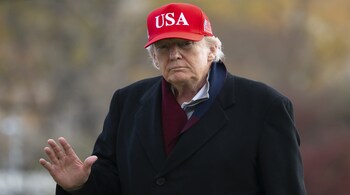
US President Donald Trump’s attempt to set a Thanksgiving deadline for a Russia-Ukraine peace agreement has collided with reality. Even as his envoys met President Vladimir Putin in Moscow this week, there was no breakthrough and no sign that Russia is prepared to soften its demands. For the White House, this is the moment when bluster meets geopolitical constraints: a stalled negotiation, a frustrated Ukrainian leadership, and a Russian president who sees little incentive to compromise, the New York Times reported.
The choices now before Washington
The lack of progress leaves Trump at a crossroads. One option is to increase pressure on Ukraine to concede even more territory and legal recognition of Russia’s control over occupied areas — a proposal that has already angered European allies and large parts of Ukraine’s political class. The second is to walk away and declare the talks unworkable, a move that would undermine Trump’s repeated claim that he could “solve the war in 24 hours.” The third, politically difficult option is to restore full-scale US military aid to Ukraine, something the president has said should be Europe’s responsibility.
Moscow signals no urgency — and no shift
Putin has spent months telegraphing a simple message: he will keep fighting until Russia gets the territorial and political guarantees it wants. After meeting Trump’s negotiators — real-estate executive Steve Witkoff and Trump’s son-in-law Jared Kushner — Putin’s advisers told reporters that no compromise had been reached on Ukraine’s territorial integrity. The Kremlin continues to insist that Ukraine cede land it still controls and that Washington formally acknowledge Russia’s earlier annexations. These are demands Ukraine has refused to even consider.
Kyiv continues to talk — but with deep scepticism
For its part, Ukraine has stayed engaged, partly to avoid being blamed for derailing talks. President Volodymyr Zelensky said in his nightly address that Kyiv would not be the obstacle to peace, even as Ukrainian officials privately acknowledge they see no sign that Putin wants a negotiated end to the war. A Ukrainian delegation is expected to meet Trump’s team in Miami, keeping the dialogue alive but with limited expectations.
A revised plan that satisfies neither side
The first draft of the US peace proposal — a 28-point plan leaked two weeks ago — was criticised in Europe for being too generous to Russia. American negotiators removed its most contentious elements, particularly those that weakened Ukraine’s security guarantees. The revised plan, however, satisfied neither Moscow nor Kyiv. Russia rejected key elements, while Ukraine fears that the United States may still press it to compromise on sovereignty.
Four strands of negotiation, none close to resolution
Officials familiar with the talks say discussions now span four tracks: Ukraine’s future sovereignty and military size; territorial control; Russia-Ukraine economic arrangements; and future European security architecture. Progress on any single track has been limited. With Russia convinced that its battlefield leverage is growing, analysts say it has little reason to soften its position.
The road ahead: negotiations without momentum
Despite the stalemate, both sides have agreed to continue meeting. Trump insists the Kremlin “would like to make a deal,” but even within his own administration there is hesitation. Secretary of State Marco Rubio has said that any final decision “must be made by Putin alone,” a reality that makes forecasting progress nearly impossible.
For now, Trump faces a dilemma familiar to many presidents before him: negotiations that are politically costly, diplomatically fragile and strategically uncertain — with no clear path to the quick victory he once promised.
Discover the latest Business News, Sensex, and Nifty updates. Obtain Personal Finance insights, tax queries, and expert opinions on Moneycontrol or download the Moneycontrol App to stay updated!





