

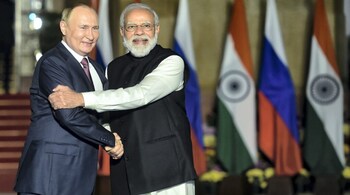
Russian President Vladimir Putin’s arrival in New Delhi has placed India’s foreign policy at a critical crossroads. For years, New Delhi has insisted it can deepen ties with Russia while expanding trade cooperation with the United States and other Western partners. But, this visit comes at a moment when the balancing act is harder than ever, especially as India recalibrates energy imports and negotiates high-stakes defence agreements.
India is buying less Russian oil, but not breaking away
India’s purchase of discounted Russian crude has been a major irritant for Washington and particularly for Trump, who has turned trade into a foreign policy weapon. When New Delhi refused to scale back Russian energy imports, it faced higher tariffs on key products, which Indian officials privately described as a punitive attempt to influence policy choices. Trump took it a step further by publicly claiming that India was helping Moscow finance the conflict in Ukraine.
However, contrary to the perception that India is expanding Russian oil dependence, the latest Commerce Ministry data tells a different story. India’s crude oil imports from Russia fell sharply in October 2025, declining 38 percent in value and 31 percent in volume compared with October 2024. Purchases dropped to 3.55 billion dollars from 5.8 billion dollars, marking the steepest one-month fall recorded so far.
This shift complicates the story of India’s Russia policy. Rather than walking away from Moscow, India appears to be fine-tuning its energy strategy, partly due to global prices, payment constraints linked to sanctions and a renewed push for diversification.
The strategy: Balance, not alignment
From New Delhi’s perspective, reducing Russian crude purchase volumes does not signal a pivot toward the West. It is meant to preserve room to manoeuvre. Analysts argue that India’s foreign policy is guided by strategic autonomy rather than ideological blocs.
As ORF's Nandan Unnikrishnan has pointed out, there is “no contradiction… in having an ambitious trade deal with the United States and having a working relationship with Russia.” The Modi government is betting on this logic: that India can negotiate strong energy and defence ties with Moscow while simultaneously expanding trade with Washington.
The Kremlin understands this reality, experts say. According to political scientist Kanti Bajpai, “There is a close relationship between New Delhi and Moscow. Putin knows that Modi’s under considerable pressure there. He does have a domestic constituency to answer to, and he’s between a rock and a hard place.” Russia, therefore, is unlikely to demand exclusivity.
The West is watching defence deals closely
India’s reduced oil purchases may ease some pressure from Washington, but the bigger flashpoint is defence cooperation. During Putin’s visit, discussions are expected around major contracts, spare parts supply chains and co-production projects. These areas will draw intense scrutiny from the United States, especially at a time when India and Washington are working toward a broader bilateral trade agreement.
Here, the diplomatic cost becomes clear. As Unnikrishnan cautioned, “India will have to be careful to that extent, particularly since the bilateral trade deal has not been arrived at.” He added a warning that reflects the fragile moment, saying, “You don’t want to inject any more irritants into a difficult phase as it exists today.”
A balancing act that must hold
India’s message to both sides is simple: it seeks a stable Russia to counter China, and a productive partnership with the West to build trade, technology and defence capacity. The question is not whether India will choose one over the other. It is whether India can keep all relationships functional without provoking active retaliation.
Putin’s visit tests that claim. With oil purchases slowing, defence ties under scrutiny and Western patience thinning, New Delhi is trying to prove that strategic autonomy is still viable. The next few months may determine whether India’s balancing act remains a carefully managed strategy, or whether global rivalry forces the country to choose sides sooner than it wants.
Discover the latest Business News, Sensex, and Nifty updates. Obtain Personal Finance insights, tax queries, and expert opinions on Moneycontrol or download the Moneycontrol App to stay updated!





