

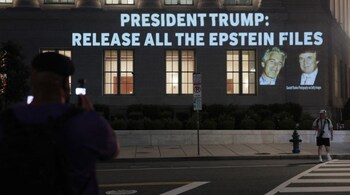
The United States is set to make public a trove of long-sealed documents connected to disgraced financier and convicted sex offender Jeffrey Epstein, reopening one of the most controversial criminal cases in recent American history.
The release, scheduled for Friday, follows the enactment of the Epstein Files Transparency Act, a law that compels the Justice Department to disclose internal records that have remained hidden for years. The move places renewed scrutiny on how Epstein was able to operate for decades despite repeated warnings and allegations of abuse.
What the documents may reveal
The documents are expected to include investigative files, correspondence within federal agencies and court records linked to Epstein’s alleged sex trafficking network. Lawmakers say the disclosure is a legal obligation, not a discretionary act.
House Democratic Minority Leader Hakeem Jeffries warned that failure to comply would trigger bipartisan backlash. He said Congress expects the Justice Department to follow the law as written.
Survivors hopeful but wary of redactions
For survivors and advocates, the release represents a rare chance to confront a system they believe shielded powerful figures while victims were ignored. At the same time, there is widespread concern that key details could remain hidden under legal exemptions.
The law allows the Justice Department to withhold information that could expose victims, jeopardise ongoing investigations or threaten national security. This gives prosecutors broad authority to redact names and sensitive material, though the statute explicitly prohibits redactions based on political discomfort or reputational harm.
No certainty of a “client list”
As a result, expectations of a definitive list of Epstein’s alleged clients remain low. The Justice Department has repeatedly stated that no such formal list exists, tempering hopes of dramatic revelations.
Still, observers say the records could clarify how Epstein operated, who enabled him and why federal scrutiny stalled for years.
Political sensitivity for Trump administration
The moment is politically fraught for President Donald Trump, whose administration now oversees the release. Epstein moved for years in elite social circles that included wealthy business leaders, politicians, academics and celebrities.
Trump himself socialised with Epstein in the 1990s and early 2000s, appearing alongside him at events in Palm Beach and New York before later saying their relationship ended. The president has not been accused of wrongdoing in the case.
From transparency push to reluctant disclosure
Trump and his allies have frequently argued that influential Democrats and figures from the entertainment industry were shielded from accountability. Yet after returning to office, Trump dismissed earlier transparency demands as politically motivated.
He eventually signed the Epstein Files Transparency Act after overwhelming bipartisan support made opposition untenable, transferring responsibility for disclosure to the Justice Department.
Case that still unsettles Washington
Advocates say Trump’s shifting position has fuelled uncertainty over how much information will ultimately be released. His recent orders to investigate Democrats linked to Epstein have also raised questions about whether ongoing probes could be cited to justify further redactions.
Epstein’s case remains explosive because of what it represents. Prosecutors allege he trafficked hundreds of girls and young women, using his wealth, private jets and luxury properties to facilitate abuse.
A history of missed accountability
In 2008, Epstein secured a controversial plea deal in Florida that spared him federal prosecution and shielded potential co-conspirators from exposure. His 2019 arrest briefly revived hopes of accountability before his death in a New York jail, officially ruled a suicide, reignited public outrage and suspicion.
Lawmakers demand full compliance
Lawmakers say the document release will test whether the justice system is prepared to confront its own failures.
“The truth is we don’t know what the Justice Department is going to do,” said Representative Robert Garcia, the top Democrat on the House Oversight Committee. “But they have a chance to do the right thing, and they should take it.”
Whether the disclosures deliver clarity or deepen mistrust may determine how long the Epstein case continues to shadow American politics and public institutions.
Discover the latest Business News, Sensex, and Nifty updates. Obtain Personal Finance insights, tax queries, and expert opinions on Moneycontrol or download the Moneycontrol App to stay updated!





