

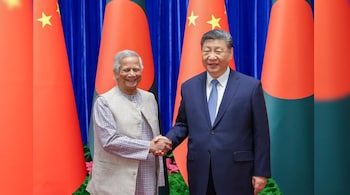
China on Tuesday stuck to its familiar language of caution and restraint while responding to questions on the rapidly deteriorating situation in Bangladesh, even as the Yunus-led interim government faces mounting criticism over political violence, law and order failures, and attacks on minorities ahead of elections.
Responding to media queries, a Chinese foreign ministry spokesperson said, “China wishes Bangladesh safe, stable and smooth parliamentary elections. We believe that various sectors of Bangladesh will properly advance important political agendas and uphold national solidarity and stability.”
The carefully worded statement comes amid widespread unrest that has exposed the interim administration’s inability to maintain basic security. Protests erupted across the country after youth leader Sharif Osman Hadi was shot dead, followed by a national day of mourning. Media offices were torched, journalists intimidated and civil society groups warned of a sharp decline in safety as the political climate worsened. The situation has been further aggravated by attacks on minorities, including the lynching and burning of a Hindu garment factory worker over alleged blasphemy.
While the interim government led by Muhammad Yunus has sought to reassure international partners about holding timely and credible elections, events on the ground have consistently undercut those assurances. Persistent political killings, unchecked street violence and communal attacks have raised serious questions about the administration’s capacity to oversee a free and fair electoral process.
Beijing’s response is also shaped by its expanding strategic footprint in Bangladesh. China has emerged as one of Dhaka’s most significant economic and defence partners, deepening infrastructure investments and military cooperation since the interim government assumed charge in 2024. Analysts note that China’s emphasis on stability and national solidarity mirrors its broader preference for predictable regimes, even when governance standards deteriorate.
China’s muted approach stands in contrast to sharper concerns voiced by the United States and other regional and Western actors, who have called for de-escalation of violence and credible democratic safeguards before the February elections. By avoiding any direct criticism of the turmoil, Beijing has signalled continuity in its non-interference doctrine while effectively overlooking the interim government’s growing failures at a moment when Bangladesh faces one of its most fragile political phases in recent years.
Discover the latest Business News, Sensex, and Nifty updates. Obtain Personal Finance insights, tax queries, and expert opinions on Moneycontrol or download the Moneycontrol App to stay updated!





