

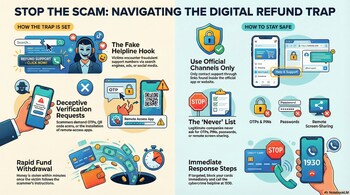


Online shopping refunds -- is a common process -- for people who love to shop online or order groceries using different delivery platforms. In short, it is a routine process and now scammers are using it to trap people and dupe money from them. Fraudsters are creating fake customer care numbers and posing as support agents, convincing users that their refund is stuck or requires urgent verification.
India’s cyber safety awareness platform run by CyberDost I4C has flagged this trend as a growing scam affecting users across major e-commerce platforms.
How the online shopping refund scam works
The scam usually begins when a customer searches online for a brand’s customer care number after facing a refund delay or payment issue.
Instead of reaching the official helpline, users often land on fake numbers promoted through misleading websites, ads, or social media posts.
Once connected, scammers pretend to be company representatives and claim they need to “process” the refund. Victims are then asked to:
- Share OTPs or bank details
- Install remote access apps
- Approve small “verification” transactions
- Scan QR codes
Within minutes, money is withdrawn from their accounts instead of being refunded.
In some cases, scammers create fake refund dashboards or send realistic-looking messages to build trust before stealing funds.
Why this scam is spreading rapidly
Several factors are fueling the rise of refund-related fraud:
High volume of online shopping and returns
Delayed refunds making customers anxious
Easy creation of fake helpline pages
People trusting quick Google search results
Scammers take advantage of urgency. When users are worried about stuck money, they are more likely to follow instructions without verifying authenticity.
Common warning signs to watch for
Refund scams often show clear red flags, including:
Customer care numbers found outside official apps or websites
Requests for OTPs or UPI approvals
Pressure to act immediately
Instructions to install screen-sharing apps
Refunds being “processed” through payments instead of reversals
Legitimate companies never ask for OTPs, passwords, or remote access.
How to stay safe from online refund fraud
To protect yourself from these scams, follow these steps:
Always contact support through official apps or websites only
Never trust customer care numbers from random search results
Do not share OTPs, PINs, or bank information
Avoid clicking unknown links or scanning QR codes
Do not install apps suggested by callers
Check refund status directly inside shopping apps
If a refund seems delayed, wait for official updates instead of searching externally for help.
What to do if you fall victim
If you suspect fraud:
- Immediately block your bank card or UPI
- Report the incident to your bank
- Call India’s cybercrime helpline at 1930
- File a complaint on the cybercrime portal
Quick action can sometimes help recover lost money.
Online shopping refunds should always flow back automatically through the original payment method. Any call demanding “verification payments” is a scam. Staying cautious and using only official customer support channels remains the best defence against these growing refund fraud traps.
Discover the latest Business News, Sensex, and Nifty updates. Obtain Personal Finance insights, tax queries, and expert opinions on Moneycontrol or download the Moneycontrol App to stay updated!





