

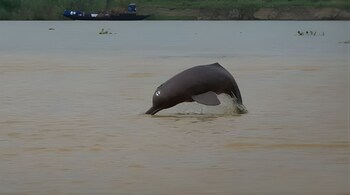


India has begun its second nationwide dolphin population survey today. The census has started from Bijnor on 17th January 2026 along key river stretches carefully. The researchers aim to update counts, track habitat quality and threats. This is part of the government’s ongoing Project Dolphin initiative. Efforts combine science, conservation and policy for river protection.
Collaboration involves state forest departments, research institutes, and NGOs. The program continues momentum from the first census completed recently. Scientists hope to map dolphin populations across India’s major rivers.
Project Dolphin: India’s Mission to Save River Giants
Project Dolphin is India’s nationwide effort to save dolphins. It was launched in 2020 under the Environment Ministry. Focus is on riverine and estuarine dolphins, India’s aquatic giants. The initiative combines monitoring, habitat restoration, and species protection. It aims to prevent dolphin population decline across river systems.
Collaborative Force behind Project Dolphin
The Wildlife Institute of India leads the survey nationwide. State forest departments provide local support along major river stretches. NGOs such as WWF India, WTI and Aaranyak contribute expertise. Teams of researchers are trained to count and monitor dolphins carefully. Collaboration ensures both scientific accuracy and local conservation knowledge integration.
Innovative Techniques Track Dolphins
Surveyors monitor rivers using boats and observation points daily. They record sightings, behavior and approximate numbers of dolphins. Water quality, habitat health and threats like fishing nets are noted. Data is fed into national databases to track population trends. Modern techniques combine traditional observation and digital mapping tools.
From Bijnor to Sundarbans: Mapping India’s Dolphins
Census will be covering rivers in Uttar Pradesh, Bihar, West Bengal and Assam. It includes Indus, Brahmaputra and major tributaries of Sundarbans. Odisha’s river systems are also part of the nationwide survey. Habitat mapping ensures endangered areas are prioritized for protection. Survey identifies safe corridors and stretches critical for dolphin survival.
Unprecedented Insights Into India’s River Dolphins
Tracking dolphins at a national scale is unprecedented in India. It creates the largest database of river and estuarine dolphins. Scientists can now analyze populations, trends, and habitat quality comprehensively. This approach merges ecology, technology, and community conservation efforts effectively. Results may influence global strategies for freshwater mammal conservation significantly.
Discover the latest Business News, Sensex, and Nifty updates. Obtain Personal Finance insights, tax queries, and expert opinions on Moneycontrol or download the Moneycontrol App to stay updated!






