



Scientists are examining how certain animals digest food without defecating. Recent biological research shows waste handling varies widely across species. These findings come from laboratory experiments and anatomical observations. Researchers say defecation is not universal across animal life. Instead, waste management reflects body structure and environment. Advances in microscopy have revealed hidden digestive strategies. These systems reflect efficiency shaped by evolution rather than limitation.
How some animals digest without producing faeces
Research shows some animals digest food producing little solid residue. Others lack anatomical structures needed for faeces formation. In several species, waste disperses through diffusion or recycling. Scientists now track nutrient movement more accurately. These findings challenge traditional views of digestion. Waste can be absorbed, transformed, or released invisibly.
Tree hole frog and confined development
One example involves the tree hole frog Kurixalus eiffingeri. Its tadpoles develop inside water-filled tree cavities. These spaces quickly accumulate waste. Researchers found tadpoles never defecate during development. The larvae feed on unfertilised eggs provided by mothers. This diet leaves minimal indigestible material. Gut examinations showed no faecal accumulation. Nitrogen waste exits mainly as ammonia through skin. These results were published in Ecology using chemical assays.
Sponges and digestion without a gut
Sponges completely lack a digestive tract. Their porous bodies constantly pump surrounding water. Food particles are captured by choanocyte cells. Digestion occurs entirely inside these cells. No gut cavity exists for waste collection. Indigestible material exits with outgoing water flow. Metabolic waste diffuses directly into seawater. These findings appear in Frontiers in Marine Science reviews.
Flatworms and single opening digestion
Flatworms use a single opening for ingestion and expulsion. Food enters through the mouth for digestion. Nutrients spread to surrounding tissues. Undigested remnants exit through the same opening. No anus exists and faeces do not accumulate. Nitrogen waste diffuses across flattened bodies. These mechanisms are documented in zoological studies archived on JSTOR.
Jellyfish and periodic waste release
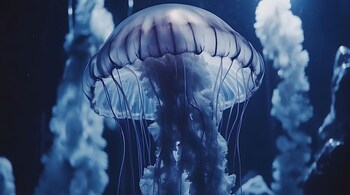
Jellyfish share a similar single-opening digestive system. Food enters the stomach through the mouth. Nutrients move through radial canals. Indigestible material exits periodically through the mouth. Waste mixes with seawater rather than forming solids. Thin tissues allow ammonia diffusion. These processes were summarised in Biology journal syntheses.
Tardigrades and extreme metabolic efficiency
Tardigrades rarely produce waste during feeding. They absorb nearly all nutrients at cellular levels. Solid waste remains minimal and infrequent. During cryptobiosis, metabolism slows drastically. Digestion halts and waste production stops entirely. Individuals survive months without defecation. Studies cited by The Scientist describe this metabolic suppression.
Together, these findings show defecation is not biologically required. Evolution offers multiple ways to manage waste efficiently.
Discover the latest Business News, Sensex, and Nifty updates. Obtain Personal Finance insights, tax queries, and expert opinions on Moneycontrol or download the Moneycontrol App to stay updated!






