

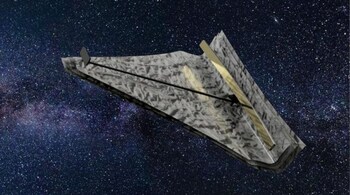
The search for another Earth has long fascinated humanity. Scientists now believe a rectangular-shaped telescope may hold the answer. This design could make spotting distant, life-friendly planets possible within decades.
Why do we need to search for other worlds?
Earth is the only planet known to host life. All living systems depend heavily on liquid water. While single-celled life appeared early, complex life took billions. Human existence is tiny compared to Earth’s age. This suggests simple life may be common in space. But intelligent, space-faring life could be very rare. Finding it may require humans to travel outward.
Vast distances and light-speed limits restrict exploration. Even probes could only reach nearby stars within lifetimes. Sun-like stars are most promising, as they live longer. They also provide stable conditions for complex life to form. About 60 such stars lie within 30 light-years. Planets there with Earth-like size and temperature are the best targets.
What makes finding Earth-like exoplanets so difficult?
Stars shine millions of times brighter than nearby planets. Separating planet light from star glare is difficult. Optics demand very large telescopes for clear resolution. At 10 microns, the best wavelength for water signals, telescopes need a 20-metre span. Earth’s atmosphere blurs such views, so space telescopes are required. The James Webb Space Telescope, at 6.5 metres, is too small. Its launch also showed the difficulty of deploying larger ones.
One option uses many smaller telescopes acting as one. But controlling them within molecular accuracy is not feasible. Visible light needs smaller mirrors, but stars are brighter. Blocking starlight enough at visible light remains impossible. A ‘starshade’ spacecraft was also proposed to block glare. But moving it across thousands of miles would need huge fuel.
What makes the rectangular telescope different?
Researchers propose a mirror shaped one by 20 metres. Operating at infrared, like Webb, it offers strong resolution. Its length allows separating stars from planets in one direction. Rotating the mirror lets it scan all positions. Such a telescope could spot half of Earth-like planets within 30 light-years in three years. Unlike other designs, it requires no radical breakthroughs.
If one Earth-like world orbits each sun-like star, about 30 promising planets could be found. Follow-up missions could check atmospheres for life signs. Oxygen made by photosynthesis would be a clear marker. The most likely candidate could even host a probe. Images from its surface might finally reveal Earth 2.0.
Discover the latest Business News, Sensex, and Nifty updates. Obtain Personal Finance insights, tax queries, and expert opinions on Moneycontrol or download the Moneycontrol App to stay updated!





