

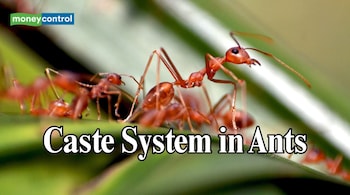
There’s more to ants than meets the eye. For years, biologists have puzzled over what decides an ant’s fate. Is it in her food or in her DNA? New research is now bringing fresh answers, and it’s changing how we view insect societies.
Small Creatures, Big Questions
In ant colonies, some grow into egg-laying queens. Others, their sisters, remain small workers. Until now, it was unclear how nature and nurture shape these roles. Scientists have long debated the influence of genetics versus environment. But a recent study from The Rockefeller University adds new insight to this old question.
The research team used clonal raider ants, Ooceraea biroi, for the experiment. These ants reproduce without males, so all share the same genes. This gave researchers control over both genes and surroundings. They changed food, temperature and carer genetics. Their goal was to find what really makes a queen.
What they found was simple, yet striking. Ant size plays a key role in caste. But genes decide how size links to status. Bigger ants tended to show queen traits like wings, eyes, and ovaries. Yet not all big ants became queens. And not all small ones remained workers. The key difference was in their DNA.
One Size Doesn’t Fit All
In one part of the study, ants from various genetic lines were raised in the same way. Yet, their caste outcomes were very different. Some lines produced queen-like ants even at small sizes. Others stayed workers unless they reached a larger size. This showed genes influence both growth and what that growth leads to.
As researcher Patrick Piekarski explained, genes do more than shape size. They decide the size threshold for queen features to emerge. So, two ants of the same height might live very different lives—all due to their DNA.
The findings also show that food and care matter—but only so much. The environment changes size, but genes define what that size means. In ant colonies, roles are more than physical; they’re written in their genetic code.
A New View on Social Insects
The study doesn’t just explain how ants grow. It shows how evolution designs complex societies with clear roles. Each ant’s path isn’t just random; it’s a product of smart biological design.
Understanding the mix of size, genes, and roles might also help us learn how social systems evolve in other animals. For now, one thing is clear: even the tiniest creatures have a clever system for choosing who leads and who works.
Discover the latest Business News, Sensex, and Nifty updates. Obtain Personal Finance insights, tax queries, and expert opinions on Moneycontrol or download the Moneycontrol App to stay updated!






