

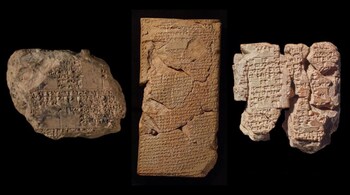
For ancient civilizations such as Babylonia and Mesopotamia, lunar eclipses were not just astronomical phenomena but were perceived as ominous signs predicting death, destruction, and disease. These deep-seated beliefs have recently been uncovered through the deciphering of 4,000-year-old cuneiform tablets, discovered more than a century ago in present-day Iraq.
The Oldest Lunar-Eclipse Omens
The four clay tablets, now regarded as the oldest known collections of lunar-eclipse omens, were meticulously translated by Andrew George, an emeritus professor of Babylonian studies at the University of London, and independent researcher Junko Taniguchi. Published in the Journal of Cuneiform Studies, their work reveals how ancient civilizations interpreted the moon's passage through Earth's shadow as a harbinger of catastrophic events.
Decoding the Omens: Predictions of Catastrophe
The ancient texts demonstrate a sophisticated system of predicting ominous events based on various factors during an eclipse, such as the time of night, shadow movements, and the eclipse's duration. For instance, one omen warns, "If an eclipse becomes obscured from its center all at once [and] clear all at once: a king will die, destruction of Elam." Other predictions include the downfall of Subartu and Akkad or the onset of pestilence, each linked to specific eclipse characteristics.
Rituals and Responses to Eclipses
Despite the dire predictions, ancient Mesopotamians believed that these ominous outcomes could be averted. When a particularly threatening omen, such as the death of a king, was forecasted, oracular investigations were conducted through extispicy—examining the entrails of sacrificed animals. If the results confirmed the danger, rituals were quickly performed to nullify the bad omen, providing hope that the future could still be altered through divine intervention and careful action.
Discover the latest Business News, Sensex, and Nifty updates. Obtain Personal Finance insights, tax queries, and expert opinions on Moneycontrol or download the Moneycontrol App to stay updated!





