

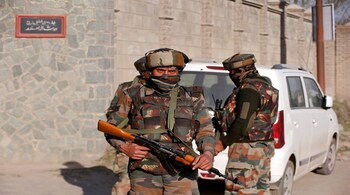
On December 4, an army ambush in Nagaland’s Mon district went horrifically wrong. A special forces unit of the Indian Army opened fire on a group of unarmed coalminers, resulting in at least 13 civilian deaths.
The army acknowledged the incident as a mistake and expressed deep regret for the loss of civilian lives. However, anger over the deaths spread not just across Nagaland but also some neighbouring states in north-eastern India.
Protests against the botched-up army operation took place along with demands for justice for the slain civilians. Calls for repealing the Armed Forces (Special Powers) Act, 1958, have also once again gained steam. While Nagaland chief minister Neiphiu Rio said the state’s people have always opposed AFSPA, his call for repealing the law also found support from Meghalaya chief minister Conrad Sangma.
AFSPA, often referred to as a draconian law, is in force currently in most of the northeast. The law bestows special powers and protection to the military for carrying out operations in areas battling insurgency. So, if the aim is to facilitate the army in countering insurgency, why are two chief ministers and the people in the northeast seeking its withdrawal?
Why the law is “draconian”
Provisions of AFSPA come into force in any area that the Central government may declare as “disturbed” for a specified period. Once an area is declared “disturbed,” the armed forces are deployed there to maintain public order. These troops are protected from prosecution against their actions.
Officers functioning in these areas under AFSPA have wide powers to make arrests and carry out interrogations, search operations and raids without the need for warrants or any other documentation authorising these acts.
The troops are allowed to use force, open fire and even kill people if there is “reasonable suspicion” against them. However, the fine print of the provisions require the forces to give a reasonable warning before opening fire or using force to make an arrest.
To a large extent, the criminal procedure enshrined in the law to ensure that the rights of those accused are upheld are waived for the armed forces under AFSPA.
In giving the military unrestrained power to search premises without warrants, make arrests on mere suspicion, and use force to make these arrests, the fundamental and human rights of civilians often appear to be watered down, making the law a highly criticised one.
Immunity or impunity for armed forces?
Proponents of AFSPA have argued that legal protection for the armed forces is imperative when dealing with areas affected by insurgency. Fear of prosecution would make it difficult for the military to carry out counter-insurgency operations, they said.
Notably, the law authorises any officer to take any action for the purpose of maintaining public order and after giving “due warning.” No legal action is allowed to be taken against any officer without prior sanction from the Central government.
Technically, this level of protection from legal action would also preclude registering of First Information Reports (FIRs) by the local police in the event an offence is found to have been committed by a military official against a civilian.
In 2016, a Supreme Court bench, while dealing with a case of over 1,500 instances of alleged extrajudicial killings of civilians in Manipur, said there cannot be absolute immunity even for the armed forces if an offence is committed. Subsequently, a CBI Special Investigating Team was directed to probe the allegations of these killings.
Time to repeal AFSPA?
The debate sparked by the December 4 incident is not the first time that calls have been made to repeal AFSPA. The constitutional validity of the law was tested before the top court in the 1990s, when it was upheld.
The law was put under review in 2005, after a separate incident led to a furore and the Justice Jeevan Reddy Commission was tasked with suggesting how the heavily criticised law can be amended to make it humane. The commission had, in 2005, reportedly recommended a complete repeal of the law.
Among the people, the law has faced resistance in every place it was enforced – from the north-eastern states to the former state of Jammu and Kashmir. The law has been viewed as a tool to curtail the fundamental rights of the people under the garb of protection for the military.
Over the years, hundreds of allegations by civilians in the “disturbed” areas hint at the army’s misuse of the protection given by the law. Activists allege that cases of disappearances, rape and extrajudicial killings reach dead-ends in areas under AFSPA rule because of the immunity this law gives to the armed forces.
Manipuri activist-turned-politician Irom Sharmila, who was declared a prisoner of conscience, was one of the most popular symbols of resistance against AFSPA.
Rio, in a tweet, called for AFSPA’s repeal stating that “Nagaland and the Naga people have always opposed AFSPA.”
What next for the Nagaland incident?
With the Central government expressing regret over the mistaken killing of unarmed civilians, home minister Amit Shah said in Parliament on December 6 that an SIT has been constituted to probe the incident and will submit its report within one month.
Separately, the army has constituted a court of inquiry reportedly to be headed by an officer of major general rank.
The Nagaland police has registered an FIR on its own accord against an army unit, stating that the killing of the civilians was done with the intention to murder and injure, according to reports.
Discover the latest Business News, Sensex, and Nifty updates. Obtain Personal Finance insights, tax queries, and expert opinions on Moneycontrol or download the Moneycontrol App to stay updated!





