

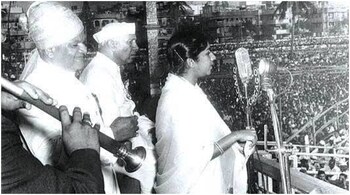
Ae Mere Watan Ke Logon -- one of the most popular patriotic songs played and performed during Independence Day and sung by Lata Mangeshkar had moved late Prime Minister Jawaharlal Nehru to tears.
Performed for the the first time in 1962, the song was written by Kavi Pradeep and composed by C Ramachandra in honour of Indian soldiers who lost their lives in the 1962 war with China.
"But when I met Panditji (Nehru), I saw tears in his eyes. He said to me 'Lata, tumne aaj mujhe rula diya (Lata, you made me tear up)',” the late singing legend had recalled in 2014.
Read more: Congress, its leaders change social media display pics to Nehru holding tricolour
Interestingly, Ae Mere Watan Ke Logon replaced the traditional Christian hymn Abide With Me for this year’s Beating the Retreat ceremony on January 29. This happened for the first time since 1950.
The patriotic Hindi song was introduced as part of efforts towards further “Indianisation” of the military, including its tunes, traditions, and customs, some of which were drawn from the British era.
Read more: This US city will celebrate India's 75 years of Independence by flying a 220-feet flag
Discover the latest Business News, Sensex, and Nifty updates. Obtain Personal Finance insights, tax queries, and expert opinions on Moneycontrol or download the Moneycontrol App to stay updated!





