

Note to readers: On social media, in conversations, and in press releases and interviews, we all tell stories about ourselves and our businesses. This is a monthly column on how to tell more compelling stories. Each column will look at one aspect of content strategy for individuals, companies and brands.
Some of the most memorable stories in the world have been built around images. In India, a photograph by Raghu Rai, taken in 1984 which showed the face of a young child being buried after the Bhopal gas tragedy became the lasting symbol of the horrendous industrial accident. It showed the enormity of the disaster and the image titled ‘Burial of an Unknown Child’ was so stark that it has recall even after several decades.
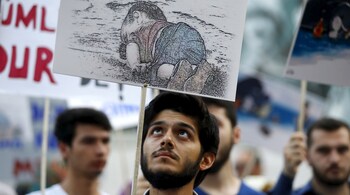
One of the more recent examples of a photograph that gained similar traction was that of Syrian child refugee Aylan Kurdi washed up on a beach. It was taken by freelance photographer Nilufer Demir. In a single photograph, she communicated the extent of the refugee crisis in which a three-year-old had drowned and washed ashore in the desperate attempt to cross to a better life in Greece.
Kurdi’s photo highlighted the Syrian refugee crisis to the world, proven by the spike in Google search around the Syrian refugee crisis hours after the image was released. People were so moved that donations to charities supporting Syrians went up.
That single image did far more to create awareness than hundreds of appeals that not-for-profits were sending out every day and the countless news articles on the Syrian humanitarian crisis and death toll. An ordinary well-dressed child lying on his stomach, dead, evoked emotions of compassion and empathy, among total strangers.
Another great example of storytelling using an image was the Labour campaign in the UK as far back as 1978 where they showed a long queue of workers outside an unemployment office with a simple message which said "Labour isn’t working". The campaign worked because of the visual kick - the story told as a simple image that most British could relate to.
The reason why images work where other forms of communication have less impact is because they force us to see what is either hard to imagine or that which we do not want to accept. As the old saying goes, seeing is believing. An image takes us to the heart of the story we are trying to tell. It’s irrefutable unless it is photoshopped or staged.
The trick then is to see how images can be deployed in everyday communication. Say, in the 10-slide business presentation that you are about to give. Would you rather say that your employees are happy and attrition is low, or would you rather use an image of happy co-workers and put a number that shows attrition is low. As an NGO, would you rather use the image of a smiling beneficiary or a rewilded patch than claiming the impact of your work through tedious graphs?
Your audience will remember the visual more than what you said, because scientific studies show that people remember better with visual aids - they are memory tools. The current boom in new mediums, be that Instagram, Tik-tok, or YouTube, is all driven by visuals, because visuals make everything more believable, even when it is a carefully curated version of reality.
So it’s worthwhile to start thinking of visuals as soon as you start thinking of your storytelling. At least if you want your story to be more memorable.
Also read: Stories that stick: Finding a story that demonstrates your uniqueness
Discover the latest Business News, Sensex, and Nifty updates. Obtain Personal Finance insights, tax queries, and expert opinions on Moneycontrol or download the Moneycontrol App to stay updated!





