

The government is likely to continue to press the pedal on a plan that aims to completely ban three-wheelers and nearly all two-wheelers that run on fossil fuels such as petrol and diesel in a few years in a push for electric vehicles.
This is despite facing strong pushback from auto companies, which say the move is hurried and that charging infrastructure in the country will not be ready in time to support the switch.
A committee of various secretaries recently proposed banning sales of fossil fuel-powered three and two-wheelers with engine capacity less than 150cc by March 2023 and March 2025, respectively.
India clocks sales of 24.5 million two-wheelers, 88 percent of which are sub-150 cc capacity, and 1.26 million three-wheelers currently.
Policy think-tank NITI Aayog, which was is part of the decision making process, had met head of companies from Bajaj Auto, TVS Motor Company and Honda in June. The meeting was done to prod the manufacturers to start switching to electric as early as possible.
But Rajiv Bajaj, MD and CEO of Bajaj Auto, Venu Srinivasan CMD of TVS Motor Company and Minoru Kato, President and CEO of Honda Motor Company, who attended the meeting, have voiced their criticism of the proposal.
While Honda has products in the sub-150cc category, with nearly three-fourths of its sales coming from that segment including the best-seller Activa, Hero, Bajaj and TVS have three-wheelers also along with two-wheelers.
“Switching to electric for such a large segment of the market and doing that in the middle of transitioning period to Bharat Stage VI is not a joke,” said a senior executive of a two-wheeler company.
“The pressure on our finances will be bigger than what we could handle. To top it all, the customer himself will not be ready to be pushed to buy an electric vehicle like this,” the executive added.
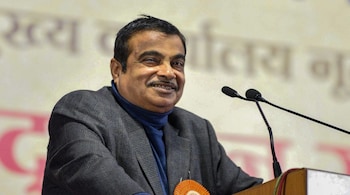
At the launch event of an ethanol-powered bike (Apache) from TVS Motor Company last week, Road Transport and Highways Minister Nitin Gadkari advocated strongly in favour of the switch. Gadkari’s ministry is part of the steering committee.
When asked if the government could reconsider the proposal of mandatory conversion to electric for some of the listed segments given the strong opposition from manufacturers, Gadkari reiterated the benefits of the switch to electric.
“With petrol at Rs 80 and diesel at Rs 70 per liter the cost of running vehicles in very high. As a person, you spend Rs 6,000 per month on fuel and if that spend drops to Rs 1,500 per month then I won’t need to come to you to do the marketing for electric vehicles. It will become a natural course,” Gadkari said.
Discover the latest Business News, Sensex, and Nifty updates. Obtain Personal Finance insights, tax queries, and expert opinions on Moneycontrol or download the Moneycontrol App to stay updated!





