

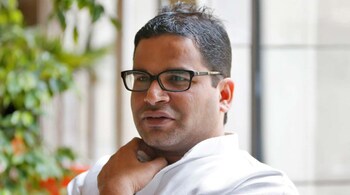
Just last month, Ripun Bora was the joint opposition candidate for one of the two Rajya Sabha seats up for grabs in Assam, with the numbers clearly favouring him on paper. After an embarrassing defeat, a disillusioned Bora joined the Trinamool Congress over the weekend. This came as a body blow to the Congress Party, which had served as the sixty-five-year-old’s political vehicle since his student days, including a six-year-long stint as PCC president until the 2021 assembly elections.
The Assam unit of the Congress Party is a case study of structural vulnerabilities steadily undermining the grand old party at a pan-India level. Ever since Himanta Biswa Sarma’s defection to the BJP in 2015, the state has witnessed several high-profile defections to other parties. Other than a gamut of leaders who switched sides owing to their allegiance to Sarma, this trend has peaked in the past year. Just ahead of the 2021 assembly elections, Ajanta Neog who was considered among the tallest Congress leaders in the state switched over to the BJP, and serves currently as finance minister in Sarma’s government. Four-time Congress MLA Rupjyoti Kurmi, the most influential leader of the tea-tribe community, also switched sides after the 2021 assembly elections, despite winning on a Congress ticket. Sushmita Dev, a budding leader from a veteran Congress family who had served as a member of parliament and the national president of the Mahila Congress, dumped the party for the Trinamool in August last year.
Although defections of influential leaders have steadily eroded the party’s base, they are at best a symptom of the rot that has set in. In the case of Assam, two factors have affected the party acutely. First, after Sarma’s defection and the passing of Tarun Gogoi in November 2020, the party has struggled to find a face with a pan-Assam appeal. Both Debabrata Saikia and Gaurav Gogoi, scions of important Congress dynasties in the state, have failed to build upon the political legacies they inherited. Second, the party’s alliance with Badruddin Ajmal’s AIUDF has polarised the electorate to the extent that the Congress Party is now firmly identified as a part of the Islamist pole in the state’s politics. The party might have more legislators than the AIUDF, but it is increasingly being perceived as a pale shadow of the latter. This is a pitfall that Sarma, as the chief strategist of the party in the Gogoi era, had been careful to avoid. Today, he exploits this asymmetry to his advantage.
Prior to the Modi era, the North East was considered a fortress for the Congress Party. While no other part of the country has re-elected an incumbent Congress state government post-2010, three Northeastern states including Assam re-elected their Congress governments between 2010 and 2014. Within two years of the BJP winning the Assam elections of 2016, every Congress government in the region was thrown out of office. The BJP and its allies continue to rule every state in the region, and for the first time in independent India’s history, the region does not send a single Congress member to the Rajya Sabha. Sarma, the architect of this transition, is certainly a once-in-a-generation strategist. However, the fault lines in the Congress camp that he has leveraged successfully, are beginning to rapidly show up in other parts of the country. Unfortunately for the Congress Party, it is being pushed to a point of no return.
As in the case of Assam, prominent dynasts are failing to make a mark or enthuse voters, both at the state level as well as on the national stage. Too self-absorbed to offer capable leaders a chance, the system is now broken to the point where they do not receive even the slightest support from Delhi, and are forced to desert the sinking ship. In the 2017 Rajya elections of Gujarat, despite then BJP president Amit Shah’s personal intervention to wipe out the Congress, the late Ahmed Patel had fought valiantly and retained the third Rajya Sabha seat for his party. Five years later, the fighting spirit is invisible. Today, Ahmed Patel’s son Faisal publicly states that he receives no encouragement from the top brass of the party, and that he is keeping his options open. Months before Gujarat goes to the polls, speculation is rife that some high-profile defections are on the cards. The PCC president Hardik Patel openly accuses the high command of making him a figurehead with no power to take decisions.
The root cause of the chaos and lethargy perhaps lies in the fact that the Congress Party, having ruled the country for most of the post-independence period, neither understands how to deal with the paucity of power nor the methods to alter such a dynamic. Entire generations of leaders have spent decades in power, acutely aware that despite the occasional ups and downs, they remain the default option in most parts of the country. Completely entrenched in the system and utilising it routinely in their favor, they have never known what it takes to be the underdog and beat the odds. This has resulted in the Congress Party being incapable of making recoveries across the board. When it lost the ability to win a parliamentary majority on its own after 1984, it lost the ability forever. When it lost the ability to win a hundred parliamentary seats after 2009, it lost the ability forever. It wins state elections only in bipolar contests when anti-incumbency against its opponent spills over, but all it takes is two credible non-Congress alternatives in any state for the party to disappear completely. This is the reason why after Delhi and Punjab, Arvind Kejriwal’s AAP is planning serious forays only in states where the Congress continues to be one of the two major players, knowing fully well that it can be edged out and replaced.
In his recent book about the BJP, journalist Nalin Mehta quotes Amit Shah as saying, “That era has gone when two leaders in Delhi would shake each other’s hands in a drawing-room and behind them a voter will follow like a bonded labourer.” The Congress Party continues to live in that era. The alliance with Ajmal in Assam is an example of exactly this sort of politics, wherein it expected the indigenous communities of the state who voted for it in the past to diligently follow them into the lion’s mouth. More than mixed messaging and the lack of a clear ideology, what afflicts the party is the inability to grasp the fact that cosmetic changes no longer have an impact in Indian politics. Even today, both Rahul Gandhi and Priyanka Vadra believe that invoking their forefathers actually brings them political dividends on the ground, blissfully unaware that the legacy which they hope to capitalise on is a troubled one in the Modi era. Every solution that the party comes up with to revive its fortunes is designed to skillfully avoid the fundamental issue of where the party’s controls lie.
The Modi era is not about one man alone. It is as much about welfare and amenities reaching the grassroots. It is as much about an election-winning machinery with no parallel. It is as much about self-made individuals with clear messaging and ideology. It is also as much about information warfare reaching every household, and skeletons of six decades steadily tumbling out of the closet. In such an era, many senior Congress leaders still believe that onboarding a well-known election strategist like Prashant Kishor is the answer to their woes. Unfortunately for them, the party is unsustainable by design in the current era.
Ajit Datta is an author and political commentator. He has authored the book, ‘Himanta Biswa Sarma: From Boy Wonder to CM’. The views expressed in this article are those of the author and do not represent the stand of this publication.
Discover the latest Business News, Sensex, and Nifty updates. Obtain Personal Finance insights, tax queries, and expert opinions on Moneycontrol or download the Moneycontrol App to stay updated!





