

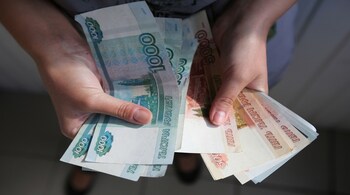
When the Russian ruble stabilised soon after Russian invaded Ukraine last year, the currency’s immunity to war was often cited as evidence of Russia’s economic resilience. Now, the ruble at its lowest level since March 2022, and it doesn’t seem to have anywhere to go but down.
Contrary to the headlines that link the decline with the recent mutiny by caterer Yevgeny Prigozhin’s Wagner mercenary army, the ruble’s decline has less to do with that short-lived upheaval than with the fundamentals of Russia’s peculiar wartime economy, a bastard mix of Cold War-era attempts at self-sufficiency and a need to maintain enough market freedom to avoid a collapse. The Russian currency has been in a marked decline since late 2022. It’s the third worst performer on Bloomberg’s extended list of major currencies so far this year, after the Argentine peso and the Turkish lira.
Since that first shock, energy prices stabilised and a $60 price cap on Russian oil supplies came into force in December. Russia has found ways to keep oil exports stable and even increase seaborne deliveries despite a Western embargo: More than 70 percent of Russian crude supplies now go to India and China, compared with less than 20 percent before the invasion. But the price cap has weakened Russia’s negotiating position in Asia, and the fears of a fuel crisis have subsided. At the same time, exporters found ways to bypass the sanctions, switching to suppliers in China and South Asia and moving Western goods via Turkey and some former Soviet republics. In the first quarter of 2023, Russia’s balance of goods and services trade shrank to $22.6 billion from $91.4 billion in the second quarter of 2022.
On the other hand, the regime’s overall stability does depend on Russia’s economic performance, and above all on the system’s ability to support the passive majority of Russians through both public spending and access to jobs.
The budget has been suffering from the energy sanctions, the near-cessation of pipeline gas supplies to Europe and the accompanying export pivot to Asia. In the first six months of this year, Russian federal budget revenues dropped almost 19 percent in nominal ruble terms, and oil and gas revenues have halved. These drastic decreases make a devaluation necessary and increase the challenge of funding the public sector, which historically has lent Putin the most support.
“Patriots” have been pushing Putin for more than a year to get rid of his relatively liberal financial managers and move the country to a war footing. Russia, however, simply lacks the resources to make such a shift tolerable for the general population. Keeping vestiges of a free market system and relying on the ingenuity of small and medium entrepreneurs, who have accumulated a lot of experience under extreme conditions since the 1990s, allows the Putin system to avoid a catastrophic drop in living standards. Official unemployment is at 3.3 percent, a historic minimum. Russia’s large excess mortality from Covid-19 and the involvement of hundreds of thousands of new conscripts in the Ukraine invasion have made workers scarce and kept pay relatively high.
Some Western economists — notably Yale University’s Jeffrey Sonnenfeld and Steven Tian — insist that Putin is testing that resilience by “cannibalising” Russia’s productive economy in order to fund the war. Tian recently wrote that Russia is “barely breaking even” on oil exports and suffering from an overall drop in commodity prices, which forces Putin to squeeze state companies and oligarchs with surprise windfall taxes. The Russian economy is “imploding,” Tian asserted, claiming that the country is “printing record amounts of money” and “forcing Russian banks and individuals to buy near-worthless Russian debt.”
Indeed, money supply was 25 percent higher year-on-year in June — another reason the ruble has been depreciating. Central bank data show low levels of government debt holdings by banks, though, and interest rates are far from their historic highs, allowing normal economic and consumer activity. Thanks to the ingenuity of finance officials and entrepreneurs, Russia remains economically resilient and can fund its wartime budget, which in 2022 reached a rather underwhelming 4.4 percent of GDP, a level it is expected to maintain this year. The agility of private companies in restructuring their supply chains and the strong labor market shouldn’t be underestimated — and since the fighting is only felt in a limited way in Russia’s border regions with Ukraine, most of the country still lives in a business-as-usual mode.
The budget pain, however, cannot be endured forever. According to ING Bank research, 42 percent of Russia’s population was dependent on government support in 2021. Prigozhin’s insurrection was met with indifference and passivity. But if poverty spreads among the budget-dependent, the next pretender to the throne may have better luck enlisting popular support.
Leonid Bershidsky, formerly Bloomberg Opinion’s Europe columnist, is a member of the Bloomberg News Automation Team. Views are personal and do not represent the stand of this publication.
Credit: Bloomberg
Discover the latest Business News, Sensex, and Nifty updates. Obtain Personal Finance insights, tax queries, and expert opinions on Moneycontrol or download the Moneycontrol App to stay updated!





