

Abihijit Iyer-Mitra
A mistake that foreign policy analysts constantly make is confusing institutional ties between countries with interpersonal relationships. A particularly telling statement of external affairs minister S Jaishankar, “we both need to tell our governments that they need to try harder” during a meeting with his US counterpart Mike Pompeo; certainly makes a case for personalisation of policy, both in the United States and India with both foreign ministers acting merely as couriers. However there are hard limits to such personalisation.
For example, no matter how much US President Donald Trump tweets against London mayor Sadiq Khan, US and UK defence and foreign policy continue to remain intertwined. The India relationship is no different. Trump clearly doesn’t have a great opinion of India, turning down an invitation to be chief guest at Republic Day, a rather well founded opinion shared by President Putin as well based on the fact ‘India talks a lot but doesn’t deliver’.
Modi's template for dealing with this remains the same, dangle out a few billion dollars-worth defence deals to each country (Rafale from France on Modi's visit there, Apaches and Chinooks from the US during Obamas visit to India) to assuage them. In this Modi and Trump are both transactional and even if we assume personalisation of policy, they only understand each other too well.
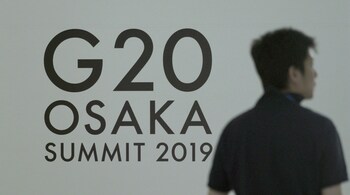
The clearest indicators of this are the five standout issues: Trade, Defence, Data Localisation, 5G and Terrorism viz Iran, discussed at the ongoing G20 Summit at Osaka, Japan. Every issue here is solvable, and much of the seemingly ill-tempered verbiage should at best be seen as posturing.
Trade, for example, shows all the signs of classic jousting for fleeting advantage. In his first State of the Union, Trump without naming India had marked it out as imposing unfair duties on Harley Davidson motorbikes. Yet action took two-and-a-half years to come with the effects being minor at best. India's retaliatory tariffs too do not seem to have ruffled feathers. It’s safe to say then that these will either be thrashed out for face saving compromises or will be allowed to linger as the new normal with neither country much affected.
Similarly, defence is a storm in a teacup. Why is it that the US never objected to the Indian long-term lease of another Russian nuclear submarine of the Akula class but does for the purchase of the S-400, a system soon to be replaced in the Russian arsenal? Arguably the Akula deal is much more technologically and strategically important than the S-400, yet the S-400, unlike the Akula, has to interface with so much US and NATO sourced equipment. This represents a clear and present danger to US military data and operational security.
This is where India's position on data localisation comes in. It is impossible to tell if the two have been linked up, but India's position on data localisation comes from the same fears of interference, manipulation and compromise as the US feels about its military software. In the case of defence, the solution is simple, as the US has the right to carry out snap inspections of equipment it has supplied (and in any case India is in no position technologically or otherwise to make Russian and US equipment to talk to each other). Why shouldn’t India demand the same audit rights and application of Indian end user laws to data stored abroad if the concern is actually security?
5G is perhaps the one subject that both countries agree on: that Huawei is best kept out. India and the US have a record of thwarting Chinese infrastructure projects often at great cost to themselves. Even here though the costs are vastly exaggerated, mostly because of a Chinese narrative capture, such as a paid piece in today's New York Times positing China as the only source of 5G technology . This is simply not true as western lower cost models also exist, specifically Ericsson's software-driven model that can be superimposed on any hardware the customer chooses (including Huawei). This is much like the Apple model, where Apple has absolute control over its phones security even though the handsets are manufactured in China.
Finally, this brings us to Iran. The MEA has probably forgotten that sanctions on Iran always had two layers. The first was a direct ban on Iranian imports. The second was using the pressure created by Tier 1 sanctions to force Iran into selling crude at below cost price simply to maintain liquidity in the Iranian economy. India's oil for goods barter deal saw to eat that whatever liquidity this was meant to provide was also choked off with payments being made in essentials rather than cash that could be diverted. Reverting to this posture given the impression of compliance and builds pressure on Tehran. Indeed, linkage to US support of Pakistan would be a good way to go back to the old arrangement.
To sum up, all the issues are solvable. The biggest problem is a lack of transmission of institutional knowledge and a severe capacity deficit on the Indian side, which is sought to be masked by over-the-top petulance and jargon like ‘strategic autonomy’. Accusations of policy personalisation are at best negotiating postures and nothing more. Irrespective, the relationship will remain stable, given there are far too many linkages. Setbacks, if they happen, will be tactical and minor at best.
Abhijit Iyer-Mitra is a defence economist and senior fellow at Institute of Peace and Conflict Studies, New Delhi. Twitter: @iyervval. Views are personal.
Discover the latest Business News, Sensex, and Nifty updates. Obtain Personal Finance insights, tax queries, and expert opinions on Moneycontrol or download the Moneycontrol App to stay updated!





