

The last fortnight of 2019 will certainly go down in Indian history as the weeks when the youth of India finally shrugged their silence and took to the streets to tell the government that they disagreed with the direction the country was headed. It was also the fortnight which saw some of the worst excesses of the police force — In Delhi, the police entered a university, and by many credible accounts (there are counter narratives, no doubt) wreaked havoc on students and infrastructure.
In Uttar Pradesh, not only was there police violence inside a university, but several accounts have emerged on police going on a rampage in cities targeting minority communities. Section 144 (of the Criminal Procedure Code, 1973), which prohibits public gathering with threat of arrest for violation, was imposed almost indiscriminately in several states across India, and Internet connections were suspended by executive fiat.
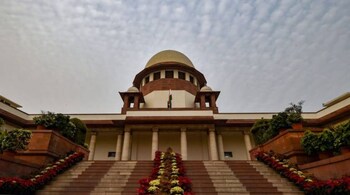
Now, a Supreme Court judgment has told us that perhaps it was all illegal. Ruling on the continuing lockdown in Kashmir, the court found that the government does not have the power to willy-nilly ‘declare Section 144’ or to order the suspension of Internet services. Framing the entire case as a balancing act between the concerns of liberty granted by the Constitution to the individual and the security concerns of the State, the apex court held that only the least restrictive measure can be imposed by the State, after assessing the existence of alternate mechanisms to achieve the same goals.
The court also finds that each such order passed must be based on individual application of mind by the authority concerned, must each be supported by sufficient material, and that each such order is amenable to judicial review. Even on communication/Internet shutdowns, the court lay down that the measures taken by the government should be such that it “burdens freedom of speech in a minimalist manner”.
The court further points out that the power under Section 144 cannot be used as a tool to prevent the legitimate expression of opinion or grievance or exercise of any democratic rights — something that we routinely saw over the last few weeks — and that the order should state the material facts that led to the application of mind by the magistrate, and should be applied in the least intrusive manner possible.
Finally on the question of journalistic freedom, the court found that “governments are required to respect the freedom of the press at all times”, and that “journalists are to be accommodated in reporting, and there is no justification for allowing a sword of Damocles to hang over the press indefinitely”.
Coming on the same day that the Bombay High Court pointed to the peaceful protests by youth and the Delhi High Court refusing to order the evacuation of protestors at Shaheen Bagh in Delhi, the judgment has much to cheer for all Indians. However, for the people of Kashmir, on behalf of whom the cases were fought, it offers scarce respite.
The court did not strike down the Section 144 orders or order the resumption of Internet services, merely directing that the orders be reviewed by certain authorities periodically. This means that it is now left to an approval committee set up by the government to decide whether the curbs are absolutely necessary.
This is but just another of several recent cases in which the Supreme Court followed laudable reasoning and analysis with a conclusion that appears to show the court as walking on egg-shells. In the Babri masjid case, the court followed creditable scrutiny of facts and exposition of the law with a final award that seems hopelessly one-sided. Similarly, in the Aadhaar case, it was merely happy to accept the government’s arguments that they mean no harm (in the form of mass surveillance) while upholding the law, even as the actions of the government pointed otherwise.
Or take several cases in 2019 where the court accepted evidence in sealed envelopes to the detriment of private citizens who were before the court for relief, unwilling to give anything more than a rap on the knuckle to the government. In this case, the court reprimanded the government for refusing to submit the orders passed in Kashmir to the court, but went no further.
It is tempting to think that it is the people on the streets that will once again remind constitutional authorities of the void they leave. Hopefully this judgment will, at the least, arm them further.
Abraham C Mathews is an advocate based in Delhi. Twitter: @ebbruz. Views are personal.
Discover the latest Business News, Sensex, and Nifty updates. Obtain Personal Finance insights, tax queries, and expert opinions on Moneycontrol or download the Moneycontrol App to stay updated!





