

By Parameswaran Iyer
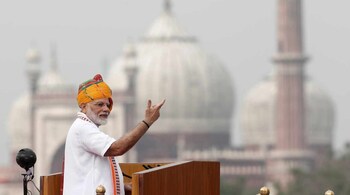
WHEN THE NEWLY elected Prime Minister of India, Narendra Modi, commenced his maiden Independence Day speech on 15 August 2014, my wife, Indira, and I were curious about his vision for the nation and the development agenda going forward. We were then living in Hanoi, Vietnam, where I was working for the World Bank. Forty- five minutes into his speech, we were jolted into amazement: the Prime Minister, in his first major address to the nation, was talking about the lack of toilets and the indignity of women and girls having to defecate in the open. This was unheard of; something culturally and socially taboo in most countries, especially in India, where such a topic was not discussed in polite society, let alone during a Prime Ministerial address to the nation.
The Prime Minister went on to announce that India would launch a Swachh Bharat Mission (SBM) – the Clean India Mission – and as a tribute to the Father of the Nation, rid the country of open defecation by 2 October 2019, the 150th birth anniversary of the Mahatma.
Achieving an ODF India in record time also means that India is attaining Sustainable Development Goal (SDG) 6.2 – Sanitation for all – a whopping eleven years before the UN’s SDG target of 31 December 2030. From having the dubious distinction of being the home of 60 crore people practising open defecation in 2014 – 60 per cent of the world’s total population of open defecators – to achieving ODF status through behaviour change at scale, in less than five years, is nothing short of a miracle. Inspired and led by the Prime Minister, however, the country and its billion-plus population have done it. Impossible is indeed nothing!
Few would dispute that SBM today has become Indian’s sanitation revolution and one of the biggest behaviour change mass movements in history. The scale of the achievement, especially in rural India, is mind boggling.
A major contributor to the success of SBM has been the policy shift towards an outcome-oriented approach, as opposed to an output-oriented one – focusing on eradicating open defecation as opposed to just building toilets. What has perhaps not been fully appreciated is that the concept of ODF itself was an early policy outcome of SBM. Prior to 2014, there had been different rural sanitation programmes in the country, but the focus of these programmes was more on constructing toilets (physical output) rather than mobilizing villages through behaviour change to become ODF (community outcome). The latter focus ensured that the entire community owned the responsibility of making their village ODF and local accountability shifted from the building of individual toilets to the community’s responsibility for using peer pressure to achieve the ‘last mile’ conversion of the village to becoming ODF.
Implementing SBM, the world’s largest behaviour change programme, in a five-year time frame has not been easy. Building infrastructure like roads, houses or power lines, while no doubt challenging, is relatively uncomplicated: it takes resources and requires engineering and management skills. But changing behaviour in tandem with implementing infrastructure (construction of toilets) is an uphill task, with a very high degree of difficulty. We sometimes used to compare the SBM challenge with attempting to paint the wings of a plane in flight. Why was it so difficult?
SBM was complex and incredibly challenging because there was no obvious demand for toilets. Marketing gurus tell us that you may have a good product, but you still need to promote it because there may be other similar products in the market which compete with yours. In the case of SBM, the major competition to adoption of toilets was the deeply ingrained and centuries-old habit of open defecation. Demand for a toilet had to be stimulated to wean people away from the habit of open defecation and therefore a behaviour change campaign had to be designed and implemented at scale. At the same time, a massive infrastructure programme to construct toilets– close to a 100 million in rural India – had to be rolled out. This in itself was an incredibly challenging task and, given the scale of the country’s geographical and cultural diversity, a decentralized and flexible approach was adopted for the supply of toilets at the local level. In most parts of the country, the preferred toilet technology option was the ‘invented in India’ twin pit–leach pit model, a low- cost, highly effective and environmentally friendly toilet.
The PM-CM-DM-VM Framework
Since sanitation is constitutionally a state subject in India’s federal structure, the Union Government could only broadly play the role of a provider of financial and technical assistance and that of coordinator, convenor and monitor. Implementation of SBM, however, had to be done by the states, districts, panchayats and villages. SBM put into practice the concept of cooperative, competitive federalism by invoking the well-known Prime Minister–Chief Minister–District Magistrate construct, and added its own innovation to this formula: the grassroots-level Village Motivator! PM-CM-DM-VM thus became the effective implementation mechanism. It took the combined effort of the Central, state and district teams, however, to operationalize this approach.
Behaviour Change on the Ground
Along with the DM, the village motivator (VM), or swachhagrahi, trained in community approaches to sanitation, and played a critical role in behaviour change on the ground through inter-personal communication with the village community. Today, SBM has over 6,25,000 swachhagrahis, on an average of one per village. The swachhagrahi uses an array of context-specific tools and techniques, including social mapping and extensive discussion at both the community and individual household levels to convince people about the usefulness of building a toilet and then using it. In some cases, the health factor works, i.e. making parents, especially mothers, realize that defecating in the open meant that flies would carry the excreta back to the food chain at home and consequently spread disease. In others, warning the community about the contamination of groundwater through open defecation is a strong motivator. Disgust at the shameful habit of open defecation would also be evoked. In the end, after an intense face-to-face discussion with the community, the village would get ‘triggered’ into accepting the fact that open defecation was not good for their community and committing to become ODF in the shortest possible time.
The programme ultimately succeeded because the people of the country adopted the programme as their own and made it a jan andolan, a people’s movement, in much the same way as the Freedom Movement prior to 1947, when a mass people’s campaign, led by Mahatma Gandhi, ended the British Raj. Led personally by Prime Minister Modi, SBM became another great people’s movement, this time against open defecation, with similar spectacular results, ending with freeing India from open defecation.
With permission, extracted from Parameswaran Iyer The Swachh Bharat Revolution: Four Pillars of India's Behavioural Transformation, HarperCollins India, Gurgaon, India, 2019. Hb. pp. 288.
Discover the latest Business News, Sensex, and Nifty updates. Obtain Personal Finance insights, tax queries, and expert opinions on Moneycontrol or download the Moneycontrol App to stay updated!





