

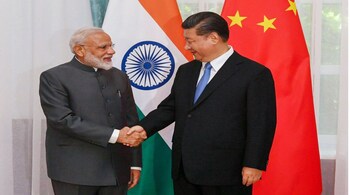
Xi Jinping, China’s President, has been elected as the general secretary of the Communist Party of China for the third time in the recently-concluded 20th Party Congress. As usual, the conventional task was done from electing the ‘leading cadre’ — central committee to amending the party charter and laying the future agenda of the party. Nevertheless, unlike previous editions, this congress marks a significant shift in the one-party ruling State. This session has made Xi’s writ large in every count.
The new central committee (CC) also indicate a break from the past. With the restructuring of the state institutions and other agencies in 2018, many of the new central committee members are representatives from the provinces who are not only experts in STEM subject areas, but also former executives from State-owned enterprises occupying party secretaries and governor positions. Likewise, at least over 29 of the 205 full CC members hail from Fujian, and Zhejiang, Xi’s power base, and an increased presence from Shaanxi, his home province.
On the other hand, although there was a substantial increase in the number of women party congress delegates, it did not reflect in the central committee, with a mere 11 women making the cut. Not to mention, even the lone woman seat at the politburo is missing this time. Minority representation also took a dent. Their numbers are nine-full and 23 alternate members among the 376 CC members.
The other political outcome is the CC’s truncated Political Bureau (PB). The new PB and its standing committee (PBSC) reflect Xi’s all-encompassing political control decimating potential challengers such as the tuanpai — Communist Youth League. Hu Chunhua, one of the incumbent vice-premiers, a prospective premier PBSC elevation, even lost his position in the reduced 24-member body from 25 earlier. Neither his provincial experience nor his stint at the central government helped him in the ‘winner-takes-all’ system. Notwithstanding other qualities, political loyalty seems to be a premium virtue required to survive in the ‘New Era’ of elite politics.
Even at the ideological level, Xi’s imprint is galore. The inclusion of ‘Two Establishes’ (liang ge queli) means the task of the party is to make Xi a core leader, and make Xi Jinping Thought on Socialism with Chinese Characteristics for the New Era the ruling philosophy. The other is the ‘Two Safeguards’ (liang ge weihu), which means safeguarding the core status of Xi within the party and the party’s central authority. Being popularised since the 19th Central Committee Sixth Plenum, the inclusion of these two catchphrases and another — ‘Xi Jinping Thought on Strengthening the Military’ in the charter puts Xi on a par with Mao Zedong, the founder of New China, and Deng Xiaoping, the reformer.
Xi’s elevation of status post-party congress is to watch out for keenly. His ruling and military thoughts have implications both within China and abroad.
For India, this is also a significant development. Although India loathes the Belt and Road Initiative (yi dai yi lu), it has been enshrined as an important foreign policy agenda. Although Luo Zhaohui, the former ambassador to India, did not make it to the central committee, his position as the head of the China Foreign Aid agency re-organised under the foreign ministry in 2018 will be crucial for India and South Asia vis-à-vis the BRI. Wang Yi, the former foreign minister, elevated to the politburo as China’s and the party’s top diplomat is a veteran of dealing with India during crises from Doklam to Galwan. Besides, Wang, who had studied in Japan and served as ambassador later in Tokyo as China’s ambassador, is also a veteran of Taiwan affairs. Qin Gang, the current ambassador to the United States, and a newly-appointed central committee, is an experienced hand in West European affairs. He will likely be elevated as the next foreign minister in spring 2023.
Another crucial development at the party congress is at the Western Theatre Command overlooking India. Wang Haijiang, a theatre commander; Li Fengbiao, a theatre political commissar; Wang Kai, commander of Tibet Military Region; and Yang Cheng, political commissar of the Xinjiang Military District, have made it to the central committee among 41 representatives from the army, and armed police. Even Xu Qiling, a current vice chair of China’s powerful Central Military Commission Joint Staff Department, served during the Galwan crisis in June 2020. Likewise, central committee members represent the Southern Theatre Command — Taiwan, and the South China Sea fall under this command. Even Zhang Youxia, despite reaching 72 years, has been retained. As a Sino-Vietnam combat veteran of 1979, he will be the first-ranking vice-chair, and will likely have more operational powers. These developments indicate a significant shift in China’s engagement in the region and beyond.
Notwithstanding these domestic and external ramifications, India and other stakeholders should engage with China in Xi’s new avatar, which can be more assertive than now, if not aggressive.
Bhim Subba teaches political science at University of Hyderabad, and is visiting researcher at Institute of Chinese Studies, New Delhi. Views are personal, and do not represent the stand of this publication.
Discover the latest Business News, Sensex, and Nifty updates. Obtain Personal Finance insights, tax queries, and expert opinions on Moneycontrol or download the Moneycontrol App to stay updated!





