

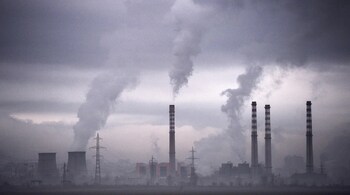
A news report on May 8 mentioned that India is asking the European Union (EU) to recognise its Emissions Trading System (ETS). One might think that why was India making such demand and what was the need. India, a signatory to the Paris Agreement, has committed to reducing its greenhouse gas (GHG) emissions by 33-35 percent below the 2005 levels by 2030. This is a significant challenge for India, home to one-sixth of the world's population and the third-largest emitter of greenhouse gases after China and the United States. With emissions mainly coming from power generation, transportation, and industries, India's path to net zero will require significant investments in renewable energy, energy efficiency, low-carbon transport, carbon capture and storage (CCS) technology, afforestation, reforestation programmes, and circular economy.
Net Zero Emissions Path
India has set an ambitious target of achieving 450 GW of renewable energy capacity by 2030, which will require a significant increase in solar and wind power generation. Additionally, it must improve its energy efficiency by implementing green building codes, electrical appliance standards and energy-efficient lighting. With transportation demand increasing, the nation must accelerate the adoption of electric vehicles to reduce emissions. Investments in CCS technology will help capture and store emissions from industries that pose challenges in decarbonisation. Reforestation programmes will help leverage forests, the most significant carbon sink. A policy-induced fiscally supported move towards a circular economy that minimises waste and promotes resource reuse and recycling will also help India on its net zero emissions path.
The cost of achieving net zero emissions will depend on India's specific policies and measures. A recent study estimates that India must invest around $2.5 trillion between 2015 and 2050 to achieve its climate goals. Successful efforts towards decarbonising nations such as Germany's ‘Energiewende’ programme, China's rapid adoption of electric vehicles and LNG trucks and Norway's carbon tax demonstrate the importance of strong political commitment, government incentives, regulations and economic instruments in driving change.
Implementing Emissions Trading System
Besides investments in renewable energy, energy efficiency and low-carbon transport, India may need to implement an ETS as a policy tool to achieve its climate goals cost-effectively. The ETS sets a cap on total emissions, creates a market-based mechanism that incentivises companies to reduce emissions, and rewards those who do so successfully. In summary, India's commitment to reducing GHG emissions is a significant challenge, but it can be turned into an opportunity with the right policies and investments. As the world's third-largest emitter, India's decarbonisation efforts will be crucial in the global fight against climate change. And the establishment of ETS is one such move that will put the process of decarbonising on a solid path, apart from helping India avoid current and future trade frictions that may arise from emission levels of processes involved in producing similar goods domestically.
An ETS can benefit India in several ways.
First, it can help India meet reduction targets more efficiently and cost-effectively. By setting a cap on emissions, the ETS ensures that emissions are reduced with options for businesses to find cost-effective reduction pathways. This can reduce the overall cost of meeting the targets and create incentives for innovations and investments in low-carbon technologies.
Second, an ETS can help meet emission targets without compromising the country’s economic growth. By creating a market for emissions allowances, an ETS can help drive investment in low-carbon technologies such as renewable energy and energy efficiency. This can create new jobs and economic opportunities while also reducing emissions.
Third, an ETS can help India to engage with the international community on climate change. As many countries worldwide adopt similar policies, an ETS can help India demonstrate its emission reduction commitments and willingness to work with others in addressing the global phenomenon.
However, implementing an ETS has its challenges. India must design a system compatible with its unique economic, structural, and political context. It must ensure the ETS is transparent and fair and does not impact its socio-economic growth aspirations with equity. It must address concerns around competitiveness and ensure that the ETS does not place an undue burden on specific companies or sectors. Despite these challenges, an ETS, with careful design and implementation, can be an effective tool for India to achieve its emissions reduction targets while promoting economic growth and engaging with the international community on climate change. No wonder the Reserve Bank of India report on ‘Currency and Finance’ released recently bats for an ETS in India. Speeding it up will prevent a ‘Carbon Clash’ with the EU over their proposed Carbon Border Adjustment Mechanism.
V Shunmugam is Adjunct Faculty at National Institute of Securities Markets. Views are personal, and do not represent the stand of this publication.
Discover the latest Business News, Sensex, and Nifty updates. Obtain Personal Finance insights, tax queries, and expert opinions on Moneycontrol or download the Moneycontrol App to stay updated!





