

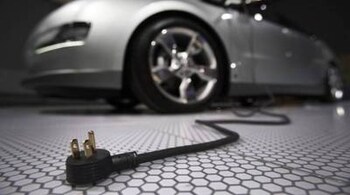
In the quest towards attaining the United Nations’ Sustainable Development Goals (SDGs) by 2030, electric vehicles (EVs) head the agenda in policy and business strategy roundtables. Their benefits are apparent: lower emissions, and reduced environmental pollution. In India, EV policies have already been rolled out in 13 states.
The life cycle of EVs (from sourcing materials for manufacturing, up until disposing battery/vehicle waste) warrants inherent changes in the way governments, industries, and societies function. As we stand at the brink of an impending EV revolution, we need to re-assess whether India is ready for it.
Currently, fossil fuels help meet 58.2 percent of India’s power demand. In June, total coal imports in India amounted to 25 million tonnes — a 33 percent increase from 2021. Shifting to EVs in 8-10 years would mean a mammoth increase in thermal power demand — as it is, the forecast for total coal demand in India in 2030 is 1,300-1,900 million tonnes per annum. This would lead to a proportionate increase in coal imports (and overall spending), since India alone cannot meet this demand without the mass displacement of people and forests.
Per capita electricity consumption in India was already 1,208 kWh in 2019-20 — around 100.6 kWh per month. An EV consumes 0.20 kWh/km. An average Indian commutes 35 km/day, and by shifting to an EV, electricity consumption would be 210 kWh more per month. In India, 8 percent of people use cars, and 54 percent use motorised two-wheelers.
For them, the electricity bill would just replace the fuel bill. However, overall increase in electricity consumption would inflict pressure on power availability for all, and therefore, increase the power tariff for the remaining population which does not even own motor vehicles (because of lower supply and higher demand). Hence, it is crucial to prevent the possible social inequalities that could arise — even as rural areas are also developing rapidly with widespread electrification coverage and better roads, gearing up to create even more demand for electricity, and vehicles in the near future.
Having considered this, it is natural to think that renewable energy could replace fossil fuels as an electricity source for EVs. While hydro and wind energy require suitable geography and massive infrastructure, solar energy is easily integrated into the Indian context — we are already the fifth-largest country in deploying solar power in the world, and ‘solar charging stations’ have been pioneered in India.
Furthermore, the Atmanirbhar policies such as the Production Linked Incentives (PLIs) for solar panels and semiconductors may ensure that such a shift to renewable energy is also driven by domestic production capacity development as opposed to import dependence as it has been in the past in the renewables/power sector, electric vehicle components, and auto industries.
Apart from these, a regulatory push for new constructions above a certain value to have solar panels could add value. Mandating the allocation of a minimum share of investment by fuel dealers for solar charging stations in metropolitan cities could also expand solar power’s footprint, as could encouraging the private sector to make onsite solar charging facilities available for employees’ EVs.
While the source of electricity for EVs is one side of the story, there are cleaner alternatives to EVs themselves — vehicles that run on biogas. The Ministry of New and Renewable Energy has introduced many schemes for encouraging biogas-based power generation to reduce farmers’ power bills.
But this effort could be more impactful if effective linkages between farmers and existing biomass producers are established, wherein the former sells crop waste to the latter for fair compensation. Consequently, the connected issue of improper disposal/burning of crop waste will be addressed, with farmers earning additional income in the process. This model could even be adapted into the urban context by incentivising households to segregate and direct organic waste to municipal corporations for conversion into biogas.
By fostering preparedness for EVs, we can avoid creating more pressure on resources, and resultant financial burden on the country. Is it easier and cheaper to first regulate vehicle ownership based on income levels, because this will lower vehicle use and, thereafter, environmental pollution? This and many more questions can be answered only through a rigorous visioning and research exercise, the outcome of which should back up the policy-level push for EVs in India.
Neharika Rajagopalan is an economic and policy consultant, Nivritti Advisory, and Badri Narayanan Gopalakrishnan is former Lead Adviser and Head, Trade and Commerce, NITI Aayog. Views are personal, and do not represent the stand of this publication.
Discover the latest Business News, Sensex, and Nifty updates. Obtain Personal Finance insights, tax queries, and expert opinions on Moneycontrol or download the Moneycontrol App to stay updated!





