

Climate change is the most important challenge facing humanity. There are numerous analyses and reports suggesting that if we don’t get our act together, future generations will struggle for both lives and livelihoods. Nations are under pressure to undo these damage, and are reaching out to all forms of governments and institutions to curb carbon emissions.
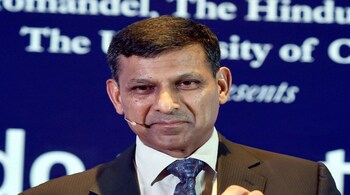
The central banks and the world of monetary policy has also been caught in this storm, and debates have started on whether the central banks should participate in this greening of the economy or not. In this regard, it has been interesting to see former RBI Governors Raghuram Rajan and Urjit Patel express their different views on the topic.
The central banks cannot make direct green policies such as carbon taxation, lower plastic usage, which fall under the purview of the governments. These banks can at best make indirect policies to nudge greener investments. These could vary from promoting issuance of green bonds, which will invest the proceeds in green technologies, to making regulations for pricing the risks from climate changes. In order to promote banks to issue such bonds, the central banks are also considering accepting these bonds for repo/liquidity purposes.
Rajan in a recent interview expressed that the central banks should stay away from mandating green bonds to the investors. As per Rajan, the central banks already have wide mandates and including greening of the economy will further widen the mandate. These green investment options are best left to the government and its fiscal policy. In an article written in May, Rajan proposed a global carbon incentive, where the countries that emit more than the global average will be required to pay those who emit less than the global average.
Patel, on the other hand, takes a wider view. In a September 8 article he says that economic activity is “strongly integrated with emissions” and this will continue to be the case in future unless we do something about it. While taking note of the central banks using the financial sector policy to green economy, he takes a broader view and asks what can the central banks’ monetary policy do to address this challenge?
Source: OMFIF.org
Patel argues that climate change can pose serious risks to output and create instability in the macro economy. This will eventually impact the inflation which is the core objective of the central banks. Thus, incorporating climate change in the central banks’ macroeconomic models is the way going forward. He says the output gap (the difference between potential and actual economic rate) should be “redefined as climate-change augmented (neutral) output gaps” which includes climate risks, else the monetary policy response will not be adequate.
To buttress the point further, Patel compares that ignoring climate change in macro models is akin to how most economists ignored the financial sector from their models before the 2008 crisis. Before the 2008 crisis, the central banks mainly looked at inflation, and as inflation was low, they did not pay attention to financial sector risks. The 2008 crisis forced the central banks to include the financial sector in macroeconomic models.
Climate change poses a much bigger risk to the output and inflation compared to the financial sector risk, and, accordingly, there is a strong need to incorporate these risks in the macro models before it is too late. If we adjust output for the emissions, there is a case that the central banks’ current policy stance is ‘conceivably, looser than it should be’.
Both Rajan and Patel have different views on the role the central banks should play in climate change. Their articles also tell us how climate change will soon occupy most discussions on economics. Rajan is in the camp of economists who are worried over increasing politicisation of the central bank, and thus want these banks to keep away from climate risks as it will politicise the institution even further. Patel, on the other hand, is in the camp which sees that if the central banks ignore the climate risks, their role as a public institution is going to be questioned.
If the climate risks indeed materialise, the central banks will anyways lose their independence as seen after the 2008 crisis. So, whichever hand you pick, the central banks are going to be under pressure. Former United States President Harry Truman once famously asked for a one-handed economist — and in this case both the hands are suggesting that the central bank independence might be under pressure going forward.
Amol Agrawal is faculty at Ahmedabad University.
Views are personal and do not represent the stand of this publication.
Discover the latest Business News, Sensex, and Nifty updates. Obtain Personal Finance insights, tax queries, and expert opinions on Moneycontrol or download the Moneycontrol App to stay updated!





