

By Swathi Kalyani
The plans to expand the Kaladan Multi-modal Transit Transport Project (KMMTTP) have highlighted how New Delhi is carving out paths to assert its regional significance while simultaneously reducing dependencies that could compromise its strategic interests.
India-Bangladesh relations have further strained following remarks by the Chief Advisor of Bangladesh’s interim government, Md Younis, about India’s northeast being landlocked, alongside reports of Chinese involvement in the redevelopment of the Lalmonirhat air base in Bangladesh. Located merely 15 kilometres from India’s border, the base’s proximity to the Siliguri Corridor—a narrow stretch of land often called the "Chicken's Neck" that connects India's northeastern states to the mainland—raises concerns about regional security dynamics.
India's response has been measured yet decisive. The initial blocking of access to Indian land routes has forced Bangladesh to rely on slower and more expensive sea routes, effectively demonstrating the economic cost of challenging India's regional interests.
The recent announcement of the construction of the Shillong–Silchar four-lane highway, which will eventually extend to Zorinpui, Mizoram, represents a deeper strategic shift. This initiative will enhance the potential of the KMMTTP—an ambitious project that promises to revolutionise connectivity to the northeast. By linking the region through the Bay of Bengal via ports and roads in Myanmar, India is creating an alternative route that completely bypasses Bangladesh.
However, the success of such ambitious projects in India's challenging northeastern geography requires more than just political will and financial resources. The region's susceptibility to natural disasters and concerns regarding environmental degradation demand continuous monitoring and adaptive management strategies. Traditional project oversight methods often prove inadequate in such dynamic areas, making advanced tech-based solutions essential.
Application of Geospatial Technology
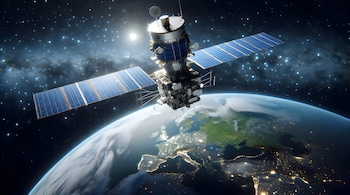
This is where India’s underutilised geospatial technology can demonstrate its potential. This technology can offer advanced capabilities for infrastructure planning, monitoring, and management. Remote sensing data can enable precise land demarcation for projects without extensive ground surveys, while regular monitoring can detect environmental changes that might threaten infrastructure integrity.
The Kaladan project involves transporting goods from India’s Kolkata port to Sittwe in Myanmar, continuing inland via the Kaladan river and finally re-entering Indian territory through Zorinpui, Mizoram. The project spans the Rakhine and Chin states of Myanmar, featuring rugged terrains, forested mountain ranges, and deep valleys—landscapes quite similar to the adjoining northeastern states of India.
Geospatial technology could provide several critical advantages in this context, including real-time satellite monitoring to track construction progress, and the integration and analysis of multiple spatial data layers—such as topography, hydrology, and land use—to create hazard zoning maps and identify potential geological risks. This can reduce some of the complexities of managing projects in such remote areas, where physical oversight is difficult and expensive.
Geopolitical tensions between India and China add another layer of complexity around India's northeastern initiatives. There have been reports of Chinese involvement in BNS Sheikh Haseena naval base development, and last year, Chinese naval ships docked at Chittagong port as part of a military exercise, which might be potential security threats for India. Similarly, the China-funded Kyaukphu port is less than 120 kilometers from Sittwe in Myanmar, creating a challenging dynamic that demands constant vigilance.
The ongoing political turmoil in Myanmar adds another dimension to the monitoring requirements, as safe passage of Indian trade through Myanmar and India’s northeast—where insurgency and infiltration remain concerns—is not guaranteed. These developments necessitate the use of high-resolution remote sensing data, not just for India’s own projects but to monitor the broader regional infrastructure landscape. Understanding the progress and capabilities of competing projects helps inform strategic decisions and risk assessments.
While the PM Gati Shakti scheme is known to leverage geospatial technology, its application in India’s cross-border projects like KMMTTP remains less visible. The advancement of objectives under the National Geospatial Policy has also been relatively slow. The North Eastern Space Applications Centre possesses adequate technical expertise, but to generate accurate GeoINT, India must complement this human resource with enhanced remote sensing capabilities. Improved airborne and ground-level surveys are also essential to overcome the constraints of satellites, such as difficulty in mapping densely forested areas and frequent cloud cover interference.
Hence, it is imperative for India to promptly and effectively invest in its geospatial sector. Integration of UAV and satellite-based surveillance, geophones to measure seismic activities, and ground stations for weather monitoring can help identify potential disruptions, alternative routes, and security threats that might impact trade flows—ensuring that economic initiatives do not inadvertently create security vulnerabilities.
The Strategic Vision
India's approach to Bangladesh reflects the evolving frontiers of geopolitical contestation. By leveraging economic interdependencies and infrastructure development, New Delhi is aiming to build lasting strategic advantages. This model of competition through economic means, backed by technological sophistication, offers a template for managing various regional challenges.
As China continues to expand its influence through the Belt and Road Initiative, India will need to accelerate its geospatial capabilities to mitigate challenges associated with infrastructural initiatives and effectively counter rival influence without resorting to direct conflict. In this context, geospatial technology is not merely a tool but a strategic enabler that transforms how India projects power and influence in its immediate neighbourhood.
(Swathi Kalyani, Geospatial Research Analyst, Takshashila Institution, Bengaluru.)
Views are personal, and do not represent the stance of this publication.
Discover the latest Business News, Sensex, and Nifty updates. Obtain Personal Finance insights, tax queries, and expert opinions on Moneycontrol or download the Moneycontrol App to stay updated!





