

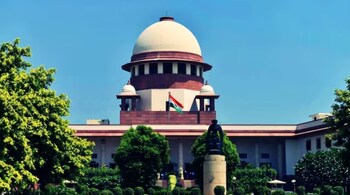
The Supreme Court ordered an Indian Police Service (IPS) officer and her parents on July 22 (Tuesday) to issue an unconditional public apology to her former husband and his family for the "physical and mental trauma" caused by a series of criminal cases she had filed during their prolonged matrimonial dispute.
According to LiveLaw, the bench, comprising Chief Justice of India BR Gavai and Justice AG Masih, observed that the husband was jailed for 109 days and his father for 103 days in connection with the multiple complaints made by the wife, which included serious allegations under Sections 498A (cruelty), 307 (attempt to murder), and 376 (rape) of the Indian Penal Code.
Altogether, she had lodged six criminal cases, including two for criminal breach of trust and three under the Domestic Violence Act, besides instituting proceedings before the Family Court for divorce, maintenance, and other matrimonial reliefs.
Taking note of the prolonged litigation and the hostile atmosphere it had created, the court said, "What they have suffered cannot be resituated or compensated in any manner” justifying the public apology as moral redress.
It ordered the wife and her parents to publish an apology in a specific format, without any alteration, in one prominent English and one Hindi national daily.
The same apology must also be published and circulated across social media platforms like Facebook, Instagram, YouTube, and others, within three days of the judgment.
The court dictated the specific language of the apology, which includes an expression of regret over the impact of the legal battles, a prayer for peace and closure for both families, and an assurance that the apology is not to be construed as an admission of legal liability.
The letter also invites the husband’s family to meet the couple’s daughter, born out of the marriage, and expresses the hope for amicable ties in the future.
The apology closes with a personal reflection from the officer, identifying herself as a practicing Buddhist, and wishing happiness and healing for the husband’s family.
While directing the apology, the bench made it clear that the officer must not misuse her current or future official position to target or harass her former husband or his family in any form, whether through third parties, official channels, or informal influence.
At the same time, it cautioned the husband and his family not to weaponise the apology in any ongoing or future legal, administrative, or regulatory forum. Any such misuse would amount to contempt of court, the bench clarified.
According to LiveLaw, the bench also asked the IPS officer to tender the apology in the following form, without any alteration:
“I S...., D/o ___, R/o. ....., hereby sincerely apologise on my and on behalf of my parents for any of my words, action or stories which may have hurt or caused annoyance to the feelings of members of ___ family namely, ____. I understand that the various allegations and legal battles have created an atmosphere of animosity and have deeply impacted your wellbeing. While the legal proceedings have now concluded with the dissolution of our marriage and the quashing of pending litigations between the parties, I understand that the emotional scars may take time to heal. I sincerely hope that this apology can be a step towards finding some peace and closure for all of us. It is regretted and I sincerely hope for peace and an amicable future for both the families. For peace, good health, prosperity and happiness of both families going forward, I sincerely hope that ___family will accept my this unconditional apology. However, dark the past may be, it cannot hold the future captive. I take this opportunity to express my gratitude to the___Family that through my life experience with them, I became a more spiritual person. As a practicing Buddhist, I sincerely wish and pray for peace, security and happiness of each member of ____family. Here, I reiterate that ____ Family is most welcome to meet and get to know the girl child born out of the wedlock who is at no fault whatsoever.
With respect and regards.
S___”
The court also invoked its powers under Article 142 of the Constitution to formally dissolve the marriage, which had broken down irretrievably, noting that the couple had been living separately since October 2018 and there remained no possibility of reconciliation due to the bitterness generated by the litigation.
It quashed and withdrew all pending civil and criminal proceedings between the parties in the interest of closure and finality.
The verdict came while adjudicating upon the transfer petitions filed by both spouses, each seeking to move the cases filed against them to their respective jurisdictions.
Discover the latest Business News, Sensex, and Nifty updates. Obtain Personal Finance insights, tax queries, and expert opinions on Moneycontrol or download the Moneycontrol App to stay updated!





