

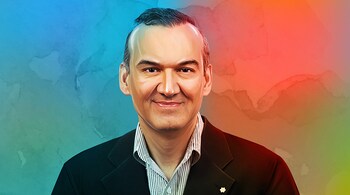
Prabhat Jha is Founding Director of the Centre for Global Health Research at St. Michael’s Hospital in Toronto, Canada. As an endowed Professor in Global Health and Epidemiology at the Dalla Lana School of Public Health, he is regarded as one of the most influential epidemiologists in the world. He talked to Moneycontrol. Excerpts:
Has India been spared the Third Wave, or would it be premature to jump to that conclusion?
Premature. Peak deaths in September to peak deaths in May took eight months. We don't know enough about how the Delta variant will behave in India, given the high levels of background infection. The past bellwethers like Mumbai are now different- for example, Kerala. So, let’s see what the states show.
We are past the third week of August, and a Third Wave should have been here, as predicted by many.
Modellers can predict anything- except the future.
Or could it be that authorities are hiding or underreporting figures?
Testing goes down in non-pandemic weeks, so it is important to track deaths and hospitalizations, despite being lag indicators. The testing percentage positive is also useful.
Conventional wisdom would have us believe that it may be difficult to conceal figures in India. Do you agree with that assessment?
Not necessarily. Death classification away from COVID has been a strategy for some state governments.
Vaccination is still pretty low, and it is doubtful even if 20 percent of the population has been covered thus far. Under the circumstances, chances of other variants of COVID floating around cannot be ruled out.
We need more genotyping data to know if it is, as suspected, the Delta that drove the last wave. Two doses are needed to counter Delta, and without high levels of coverage and uncertain evidence, if past infected (67 percent according to ICMR) have protection, it’s hard to know. I would say that national antibodies and follow up studies are needed urgently in India.
Discover the latest Business News, Sensex, and Nifty updates. Obtain Personal Finance insights, tax queries, and expert opinions on Moneycontrol or download the Moneycontrol App to stay updated!





