

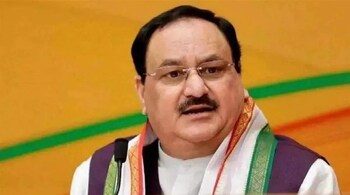
Nitin Nabin took charge as BJP’s new working president on Monday at a grand ceremony in New Delhi. Nabin is replacing party stalwart and former Union minister JP Nadda, whose tenure had ended last year but was extended in view of the 2024 Lok Sabha election.
Nadda was elected unopposed as BJP national president in January 2020. As party chief, he had his task cut out — not only to fill Amit Shah’s big shoes but also to extend the saffron party’s growth across the country. A look back at his report card as BJP chief shows that Nadda succeeded in sustaining the party’s winning momentum and helped BJP break new ground in several states, despite a few setbacks here and there.
BJP’s record under Nadda
The BJP has contested as many as 33 assembly elections under Nadda since 2020, of which it secured victories in 19 at an impressive strike rate of nearly 60%.
The 2020 Delhi election was the first electoral challenge for Nadda. However, it ended on a losing note since BJP failed to wrest the national capital from AAP. The first major electoral success for the party under Nadda came in Bihar later that year when BJP managed to form the government along with JD(U) and emerged as the single largest party in the state.
In 2021, the saffron party had a few hits and misses, with crucial victories in Assam and Puducherry but a loss in West Bengal despite the party improving its seat tally.
The year 2022 was also impressive since the party won the crucial state elections in Uttar Pradesh, Gujarat, Uttarakhand, Manipur and Goa. However, it lost Himachal Pradesh to Congress and failed to make an impact in Punjab.
In 2023, the party scripted stellar victories in the heartland states of Chhattisgarh, Madhya Pradesh and Rajasthan. The major setback, however, happened in Karnataka since BJP lost the state to Congress.
2024 began on a grim note since BJP saw a major erosion of seats in the Lok Sabha polls and failed to secure a majority in Parliament. While it wrested Odisha from BJD, marking its first victory in the state, the victory was bittersweet due to the Lok Sabha hiccup.
Later, in the first assembly elections in J&K post-Article 370 abrogation, the BJP improved its vote share from 22% in 2014 to over 25% and increased its seat tally from 25 to 29. It dominated the Jammu region but failed to return to power.
However, with victories in subsequent elections, the party under Nadda proved that the general election setback was just an aberration. In the second half of 2024, the BJP won the crucial states of Maharashtra and Haryana, dealing a setback to a rejuvinated INDIA bloc.
It followed this up with victories in both the Delhi and Bihar assembly polls in 2025, once again emerging as a well-oiled electoral juggernaut against a lacklustre opposition in disarray.
Who is Nadda?
Nadda was born in Bihar to a Brahmin family from Himachal Pradesh. He was educated in Patna University but went back to Himachal Pradesh to pursue his LLB course. At Patna University, Nadda was a member of the Akhil Bharatiya Vidyarthi Parishad. He established himself as an influential leader of the BJP in Himachal Pradesh, becoming minister in two BJP governments.
Nadda became a key member of the Modi-Shah team during the 2014 Lok Sabha election. The BJP contested the 2019 Lok Sabha election with Shah as the party president. However, Nadda was on the ground in Uttar Pradesh. Shah had set a 50 per cent vote share in Uttar Pradesh for Nadda in the 2019 Lok Sabha election. Nadda got 49.6 per cent votes for the BJP winning 62 Lok Sabha seats. This paved the way for the confirmation of Nadda succeeding Shah as the BJP president.
Discover the latest Business News, Sensex, and Nifty updates. Obtain Personal Finance insights, tax queries, and expert opinions on Moneycontrol or download the Moneycontrol App to stay updated!





