

India's ambitious air defence initiative, Mission Sudarshan Chakra, is set not only to protect key cities but also to establish an extensive network of over 7,000 radars for enhanced air defence, The Indian Express reported on Monday.
According to the early blueprint of the system, New Delhi plans to deploy around 7,000 radars, cross-linked to track enemy movements beyond the country's borders, along with laser systems (directed-energy weapons) to target enemy positions. The report further stated that all of this will be part of a single integrated network, which will also incorporate satellite surveillance to safeguard Indian skies in future conflicts.
The Indian Express report further stated that all three services - Navy, Air Force, and Army - will be part of the integrated network. In addition to the tri-services, defence PSUs, paramilitary forces, private sector companies, and research firms will also be involved in this mega mission. Locations for Mission Sudarshan Chakra have already been identified.
The mission was announced by Prime Minister Narendra Modi during his Independence Day speech. The announcement came weeks after India came close to conflict with Pakistan following the ghastly terror attack in Pahalgam on April 22. The role played by the S-400 system in thwarting Pakistani missiles highlighted how critical such capabilities are for securing the skies.
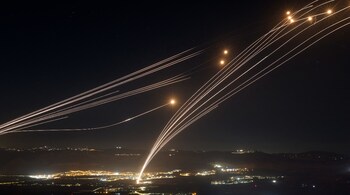
Many countries are now looking to develop indigenous solutions similar to Israel's Iron Dome. Apart from India, the US has also announced its own initiative, the "Golden Dome" project.
Currently, India's air defence system focuses on securing defence installations and other critical infrastructure in New Delhi and select locations. However, Mission Sudarshan Chakra will feature a multi-layered shield with a significantly larger protection zone. It will not only detect but also identify and track enemy targets and incoming threats.
The Indian Express report also notes that work is underway to enhance India's satellite surveillance capabilities. According to the report, over 50 surveillance-capable satellites are expected to be deployed by 2030. As part of the space-based surveillance programme, these satellites will be cross-linked with smaller satellites, radars, and other air defence infrastructure to form the integrated Sudarshan Chakra network. The Integrated Air Defence Weapon System (IADWS) was successfully test-fired last month, which is seen as an early step towards Mission Sudarshan Chakra. The IADWS included Very Short Range Air Defence (VSHORADS) missiles and a 5-kilowatt laser system. This entire setup will form part of the Sudarshan Chakra network, the Indian Express report added.
Discover the latest Business News, Sensex, and Nifty updates. Obtain Personal Finance insights, tax queries, and expert opinions on Moneycontrol or download the Moneycontrol App to stay updated!





