

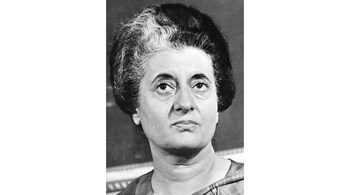
The Emergency came upon us rather abruptly. Far away from Delhi where all the action had been taking place for months before the announcement of June 25, 1975, in Kolkata (then still Calcutta) the event appeared unheralded. Which is why its gravity took a while to sink in. Indira Gandhi’s late night assurance on All India Radio “There is nothing to panic about”, did lead to creased eyebrows among the elders at home, but its true import escaped us.
There wasn’t anything in The Statesman on June 26 when we left for school. Since the proclamation had been made late in the night, the only paper that we read in those days, and swore by, couldn't carry the news. Later we would learn of the government's efforts to muzzle the press starting with censoring news of the Emergency itself. With electricity to newspaper offices in the Capital disconnected that night, the June 26 edition of many of the Delhi-based newspapers also didn’t have the news of the Emergency and the arrest of almost all opposition political leaders who had held a rally the previous evening at the Ram Lila maidan. It was only the next day, Friday, June 27, 1975 that The Statesman’s lead read “PRESIDENT PROCLAIMS EMERGENCY.”
During morning assembly in school, the wonderful Belgian priest who was our principal, gave us the highlights of the draconian measures, focusing on the arrests of the opposition leaders. He ended his speech by quoting Jayaprakash Narayan’s words “Vinasha kale vipareeta buddhi.” His clipped accent made the words sound even more ominous.
After the June 12, 1975, verdict of the Allahabad High Court convicting Indira Gandhi of electoral malpractices and disqualifying her from Parliament while imposing a six-year ban on her holding any elected office, there had been tension in the air. Coming on top of the loco workers strike the previous year and the ongoing JP movement, it was evident that something had to give. But in Calcutta, there were enough local problems to relegate national issues to Coffee House discussions. In any case, the Black Marias and the detention of people by police without any charges being filed or without notifying their families, was nothing new in Calcutta. The state government had employed those tactics for the last few years to purge the Naxalite movement that had swept through the city. Siddhartha Shankar Ray, the West Bengal chief minister at the time, was already unpopular, having squandered most of the goodwill that saw the Congress storm into power in the previous assembly elections in 1972. But it was only much later that his role in advising Indira Gandhi to impose the Emergency would be revealed.
Right then, we had other things to worry about. Just into high school, the infernal weekly tests were top of mind. Besides, many of us were still smarting from the Indian cricket team’s pathetic showing in the inaugural World Cup which had ended just four days earlier. Sunil Gavaskar’s 60-over crawl against hosts England for just 36 runs had dominated our conversations for the last few weeks.
On the streets too not much seemed to have changed, at least in the first few weeks. In fact, the government’s paranoia created its own set of hilarious incidents. In one much circulated anecdote a woman on a bus was apprehended by the police after she was overheard telling a friend “This Indira is really becoming a nuisance.” They had to let her go when she clarified that she was merely complaining about her house help.
But it didn’t take long for the hilarity to be replaced by shock as reports of the horrors of what Indira Gandhi had unleashed started emerging slowly. In a sense it was a bitter political science lesson, drawn not from our books but from the world around us. Laws like the dreaded Maintenance of Internal Security Act (MISA), the Defence and Internal Security of India Rules and the Conservation of Foreign Exchange and Prevention of Smuggling Activities Act, had hitherto just been dull tongue twisters. But with accounts of how they were used to target not just political opponents but students and civil rights activists, we realized just how vicious they were.
Not yet old enough to vote when the elections of 1977 finally brought an end to the dark days, we celebrated the defeat of the Congress nevertheless. It was a political coming of age for us.
Discover the latest Business News, Sensex, and Nifty updates. Obtain Personal Finance insights, tax queries, and expert opinions on Moneycontrol or download the Moneycontrol App to stay updated!





