

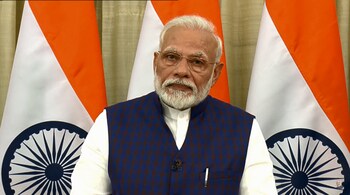
The Centre is considering a request made by most states to extend the ongoing nationwide lockdown by two weeks beyond April 14, the government said on Saturday after Prime Minister Narendra Modi interacted with chief ministers and told them the focus should be now on ensuring health as well as prosperity of the nation.
During the video-conference with the CMs today, most states requested Prime Minister Modi to extend the lockdown for two more weeks, a government spokesperson said. “The Central Government is considering this request.”
An official statement about the interaction later said that talking about the exit plan from the lockdown, Modi said there seems to be a consensus amongst the states on extending the lockdown by two weeks.
“He underlined that the motto of the government earlier was 'jaan hai to jahaan hai (saving lives)' but now is 'jaan bhi jahaan bhi (saving lives as well as making the country prosperous),” the statement said.
There are indications that an extension in the lockdown may come with certain relaxations to boost economic activities. Sources said proposals being considered include diluting the restrictions in areas unaffected by the virus.
The ongoing 21-day nationwide lockdown to contain the COVID-19 crisis is scheduled to end on April 14.
After the interaction, Karnataka Chief Minister B S Yediyurappa said the lockdown post April 14 would be different from the ongoing three-week lockdwon.
He said the PM told the chief ministers that the extension of the lockdown was inevitable and guidelines will be issued in a couple of days on its implementation for further 15 days.
According to the statement, during his interaction, Modi, himself wearing a white mask, told the CMs, "While announcing the lockdown, I had said 'jaan hai to jahan hai'... Most people in the country understood it and discharged their responsibilities by remaining indoors. And now it is imperative to focus on both aspects, 'jaan bhi jahan bhi', for India's bright future, and a prosperous and healthy India.”
He said if every citizen does his work while keeping both these aspects in mind and follows government instructions, the country's fight against COVID-19 will get further strengthened.
Farmers and industry bodies have sought certain relaxations during the lockdown to carry out necessary activities.
During the video conference with Modi, several chief ministers including Punjab's Amarinder Singh, West Bengal's Mamata Banerjee and Delhi's Arvind Kejriwal suggested extending the lockdown at least by a fortnight.
Odisha and Punjab have already extended the lockdown till April 30 and May 1 respectively.
The CMs also sought financial and fiscal assistance from the Centre to boost their resources in this fight against the pandemic, the statement said.
Reflecting on the fight so far, Modi said that the combined effort of the Centre and the states have helped minimize the impact of COVID-19 on the country.
But as the situation is rapidly evolving, constant vigilance is paramount, the statement said. "He emphasized the criticality of coming 3-4 weeks for determining the impact of the steps taken till now to contain the virus.”
The prime minister also used the opportunity to assure the state that India has adequate supplies of essential medicines. He warned against blackmarketing and hoarding. On the shortage of personal protective equipment (PPE) for medical professions, the PM said that measures are being taken to ensure availability of protective gear and critical equipment for all frontline workers.
He also condemned the instances of attacks on doctors and medical staff, and misbehavior with students from the North-East and Kashmir.
Modi underlined that such cases need to be dealt with firmly. He also spoke about the need to curb lockdown violations and ensure that social-distancing is followed.
The government has stressed since there is no medicine or vaccine to cure COVID-19, social distancing must be followed to curb its spread.
During the interaction, Modi talked about strengthening healthcare infrastructure and reaching out to patients through telemedicine.
He also suggested that direct marketing of farm produce can be incentivised to prevent crowding at mandis, for which model agriculture produce marketing committee (APMC) laws should be reformed.
The PM also referred to the Aarogya Setu app and spoke about popularising it to ensure downloads in greater numbers.
"Based on those experiences, India has made its own effort through the app which will be an essential tool in India's fight against the pandemic ... He also referred to the possibility of the app being an e-pass which could subsequently facilitate travel from one place to another," the statement said.
Talking about the economic challenges arising out of the health crisis, Modi said it is an opportunity to become self-reliant and turn the nation into an economic powerhouse.
Defence Minister Rajnath Singh, Home Minister Amit Shah, Health Minister Harsh Vardhan and some senior officials, including from the Union Health Ministry were present during the meet.
The CMs who attended the meeting included Mamata Banerjee (West Bengal), Uddhav Thackeray (Maharashtra), Yogi Adityanath (Uttar Pradesh), Manohar Lal (Haryana), K Chandrashekhar Rao (Telangana) and Nitish Kumar (Bihar).
Follow our full coverage of the coronavirus pandemic here.
Discover the latest Business News, Sensex, and Nifty updates. Obtain Personal Finance insights, tax queries, and expert opinions on Moneycontrol or download the Moneycontrol App to stay updated!





