

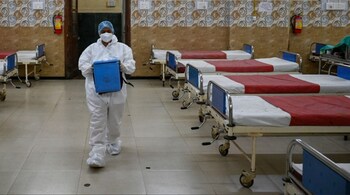
India recorded a spike of 636 coronavirus infections in 24-hour period, according to Union health ministry data released on January 1. India's active Covid-19 touched 4,394.
The country reported a total of 145 cases of COVID-19 subvariant JN.1 till December 28. The World Health Organisation (WHO) classified JN.1 as a variant of interest and as distinct from its parent lineage, BA.2.86. WHO has informed that based on current evidence, the overall risk posed by JN.1 remains low. As per the health department, Omicron XBB.1.16 is a dominant variant of COVID-19 and a total of 1,972 cases were reported.
Cases Across States
Amid rising COVID-19 cases, the Leh district administration today said wearing masks in public places will be mandatory for people. The district recorded 11 COVID-19 cases last week.
"People must ensure compulsory wearing of facemasks in offices, workplaces and public places, including public transport," District Disaster Management Authority CEO Santosh Sukhadeve said in an official order.
Ten states and Union territories have so far detected the presence of the JN.1 sub-variant of the virus. These states are Kerala (83), Goa (51), Gujarat (34), Karnataka (eight), Maharashtra (seven), Rajasthan (five), Tamil Nadu (four), Telangana (two) Odisha (one) and Delhi (one), according to the Indian SARS-CoV-2 Genomics Consortium (INSACOG). In the span of a week, Karnataka recorded 922 new COVID cases, marking a three-fold increase from the 309 cases reported in the preceding seven days.
In Mysuru zoo, precautions are being taken to curtail the spread as Omicron sub-variant JN.1 was detected in Mysore that led to the death of one person. As per a TOI report, before entering the animal enclosures zoo keepers are supposed to dip their feet in the chemical-mixed water. The vegetables and other food products that is served to animals is chemically cleaned.
What Global Bodies Have to Say
The JN.1 sub-variant of the coronavirus was previously classified as a variant of interest (VOI) as part of the BA.2.86 sub-lineages, the parent lineage that is classified as a VOI, the World Health Organization (WHO) said. However, in recent weeks, JN.1 cases continued to be reported from multiple countries and its prevalence has rapidly increased globally.
The Centre has asked the states and Union territories to maintain a constant vigil amid an uptick in the number of Covid cases and the detection of the JN.1 sub-variant in the country.
Discover the latest Business News, Sensex, and Nifty updates. Obtain Personal Finance insights, tax queries, and expert opinions on Moneycontrol or download the Moneycontrol App to stay updated!





