

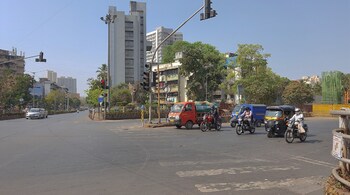
Registering about 60 percent of Maharashtra's 1,000+ coronavirus cases, India's financial capital Mumbai has emerged as one of the hotspots in the country. According to officials from the city's civic body, the Brihanmumbai Municipal Corporation (BMC), the number of cases in the city, and its everyday increase, is the result of rapid and constant testing.
"The rise in the cases is seen because... vigorous contact tracing efforts by the health teams of the MCGM and all high-risk contacts are given timely attention and tested," the BMC said in its daily report on the number of cases and deaths in the city on April 7, a day when the city reported 100 new cases.
"... The spike in cases is being seen as we chase each case with contact tracing, testing and isolation carriers," Worli legislator and a minister in the state government, Aaditya Thackeray, said in a tweet. Thackeray's constituency, falling under the G-South ward, has seen the most cases in Mumbai, with a spike of 133 cases over the course of past 24 hours itself.
BMC chief Praveen Pardeshi reasoned that the sudden spike might also be due to passengers from countries like Saudi Arabia and United Arab Emirates (UAE) not being put on the quarantine list.
"Around 60 percent of flyers came in from countries like the UAE and Saudi Arabia, and since they were not on the list and did not show any symptoms at the time of arrival, they were let go," the commissioner told The Economic Times.
But it's not just that or the increase in contact tracing. A civic body official in the K-East ward, encompassing areas of Andheri (East) up until Aarey Colony in suburban Mumbai, said crowding around places selling essential services too has been a problem.
"This is the reason why we have stopped the selling of vegetables and fruits in containment zones, because despite telling people that even as you step out to buy these essential commodities, it is important to maintain distance, that was not being done," the official, who did not wished to be named, said.
Officials said it is measures such as these, among others, that the city is now adopting to contain the spread of the virus. At this point, the BMC has declared 241 areas as containment zones. But the focus, Pardeshi told Hindustan Times, is going to be aggressive testing.
"I have now authorised ward officers to engage private laboratories to conduct tests, because government laboratories are going to be overburdened. If a ward officer feels testing on a large scale is needed in any area in his ward, say for example where a Covid-19 positive patient has been found, the BMC will subsidise private lab tests the ward suggests," Pardeshi told the newspaper.
The civic body has also now started using hydroxycloroquine tablets for those on the front lines, and Pardeshi said they are also working to procure rapid antibody detection test for 5,000 health care workers.
"Though these tests cannot affirm if a person is COVID-19 positive or not, what they do affirm is the presence of antibodies, which helps us understand who will be able to face the viral attack," Pardeshi told The Indian Express.
Depending on the results, the BMC will then divide its staff into two: those who test positive for the antibody will work at four COVID-19 hospitals while the others will be given administrative duties.
The civic body has also started airlifting Personal Protective Equipment (PPE) for its staff from a unit in Coimbatore, Tamil Nadu. According to HT, BMC's target is to procure 35,000 PPEs per week for its medical workers.
Discover the latest Business News, Sensex, and Nifty updates. Obtain Personal Finance insights, tax queries, and expert opinions on Moneycontrol or download the Moneycontrol App to stay updated!





