

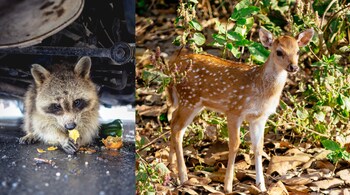
One of the most extensive wildlife studies conducted to date, involving over 220 researchers, 163 mammal species, and 5,000 camera traps worldwide, has unveiled how wild animals react to human presence, contingent upon their habitat and dietary habits.
Larger herbivores, such as deer or moose, tend to exhibit heightened activity in the presence of humans, while carnivorous species like wolves or wolverines often display decreased activity, opting to avoid potentially risky encounters.
In urban settings, animals like deer or raccoons may show increased activity around humans, habituating to their presence and scavenging for food sources like garbage or vegetation, especially during nocturnal hours. Conversely, wildlife residing farther from urban sprawl exhibit heightened wariness towards human encounters.
Amid the COVID-19 pandemic, mobility restrictions provided researchers with a unique opportunity to study wildlife responses to fluctuating human activity levels. The researchers noted that contrary to popular narratives, there wasn't a uniform pattern of wildlife “running free” during lockdowns. Instead, animal responses varied significantly based on landscape conditions and their position in the food chain.
Natural experiments or observational studies like this one offer insights that are difficult, even impossible, to gain in a laboratory or under controlled conditions.
These findings underscore the importance of conservation measures aimed at mitigating the adverse impacts of human disturbance on wildlife. It also emphasised the necessity of tailored strategies, ranging from setting aside protected areas free of human activity to implementing seasonal restrictions in sensitive habitats.
Furthermore, the study highlights the importance of nighttime as a refuge for urban wildlife and suggests strategies such as securing trash bins and implementing road mitigation measures to reduce human-wildlife conflicts.
As global travel and outdoor recreation surge post-pandemic, understanding wildlife responses to human activity becomes increasingly vital for developing effective conservation plans with both local and global impacts. Consequently, efforts to enhance wildlife monitoring systems using tools like camera traps are underway to continue observing animal behaviours and inform future conservation initiatives.
Discover the latest Business News, Sensex, and Nifty updates. Obtain Personal Finance insights, tax queries, and expert opinions on Moneycontrol or download the Moneycontrol App to stay updated!





