

In the 1950s, the damming of rivers that drained into Gujarat’s Banni grasslands caused a sudden spurt in salinity in the area. To arrest it, the state government began to plant a tree from South America, known as Prosopis juliflora, in the 1960s. The salt-tolerant, fruit-bearing and resilient tree has flourished in the region since. Locals call it gando baval or ‘mad babul’ since it grows everywhere.
The planting of exotic, invasive plant species, like Acacia tortilis and Prosopis juliflora, has long been encouraged as part of plantation drives looking to greenify India. These species survive on little water and thrive in extreme weather conditions, which makes them easy to plant in areas where forestation usually is an arduous task. But they are seldom compatible with local wildlife or indigenous plant species, and often lead to the degradation of the area where they are planted. For example, since the introduction of Prosopis juliflora, more than 50% of the Banni grasslands have been transformed into a stable woody vegetation-dominated landscape.
“Historical greening programs often rely on non-native species to increase forest cover, especially in drylands. Prosopis juliflora is commonly used. Similarly, lantana camara now covers large patches of forest lands,” says Chetan Misher, biologist and researcher at Ashoka Trust for Research in Environment and Ecology.
Root of the problem
As per the International Union for Conservation of Nature (IUCN), invasive alien species (IAS) are animals, plants or other organisms that are introduced into places outside their natural range, negatively impacting native biodiversity, ecosystem services or human well-being.
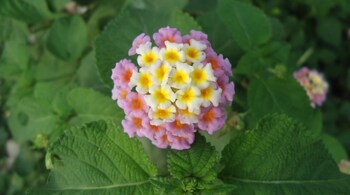
Lantana camara, for instance, is listed among the world’s 100 worst invasive species. The tropical American shrub with beautiful flowers, which was once planted to beautify streets and manicured gardens, can now be found across the length and breadth of the country. As per a recent study, it occupies 1,54,000 sq km forests (more than 40% by area) in India’s tiger range, where it competes with native plants for space and resources, often resulting in scarcity of foliage for herbivores.
Invasive species pose several other threats. Their presence promotes wildfires, and prevents the regeneration and expansion of indigenous species in their natural habitats. They also reduce natural resources for the people living around the forest who depend on it for their livelihoods.
“IAS also adapt more easily to and proliferate in diverse environments scenarios, so they are more adept at handling the effects of climate change. While there are no precise estimates of the total area impacted by IAS, places that have a combination of sunshine and moisture suit them the most,” says Tanmay Jha, who works towards the conservation of forests in Jharkhand.
Deep impact
It takes a toll on biodiversity and the economy. India comes in second (after the US) on the list of invasion-cost bearing countries. As per a study, it is home to more than 2,000 alien species, of which 330 species are declared invasive. Only 10 of these IAS cost the Indian economy Rs 8.3 trillion. And although the number of invasive plant species (173 species) outnumbers invasive animals (157 species), the cost of invasive plants is estimated 1,000 times less compared to invasive animals, indicating that more research is needed to understand invasive plants and their impact.
Such knowledge gaps have only exacerbated the problem, so far. For instance, the government of India launched the National Agroforestry Policy in 2014 to encourage tree plantation on farms to dampen the effects of climate change through microclimate moderation and increase the resilience of the landscape. Exotic tree species such as Eucalyptus, Poplar and Prosopis juliflora were also introduced to contribute to the success of these programmes.
Similarly, powered by initiatives such as the National Mission for a Green India, National Afforestation Program and Trees Outside Forests in India, the State of Forest Report (ISFR) 2021, released earlier this year, stated that the country’s tree and forest cover has increased by 2,261 sq km. But, as per the report, “forest cover” includes all tree patches which have canopy density more than 10 percent and area of one hectare or more in size, irrespective of their legal status and species of trees. Which means IAS across the country have also been included in the report as “forest”.
Cut it out
The safest way to manage invasive species is by prevention. It is also the most economical method. If an invasive species is identified early and dealt with, it is more effective than trying to control a widespread infestation. But if eradication is not possible, control and management are the only options yet (though they may not work).
The Tamil Nadu government, for example, has started the Herculean task of removing invasive plant species from forest areas after a recent compendium of plants recorded 2,459 non-native alien species, comprising nearly 36.6 percent of the state’s flora.
“But before all this, we need to move away from the term 'reforestation'. It undermines the value of other ecosystems, and is a major driver of blanket plantation everywhere without considering the actual state of the ecosystem and its role in biodiversity and people's livelihood. The focus instead should be on ecosystem restoration. Because the afforestation of grasslands and deserts is not reforestation but the degradation of these ecosystems,” says Misher.
Discover the latest Business News, Sensex, and Nifty updates. Obtain Personal Finance insights, tax queries, and expert opinions on Moneycontrol or download the Moneycontrol App to stay updated!





