

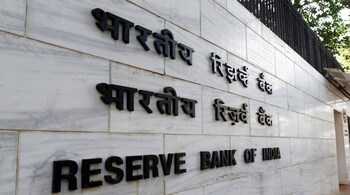
Only about 5 percent officers of the proposed strength (around 1,500) have opted to join the new Specialised Supervisory and Regulatory Cadre (SSRC) of the Reserve Bank India (RBI).
This lack of participation has pushed the fate of the new department into uncertainty. The cadre was formed on November 1 last year to strengthen and consolidate the supervision functions, presently scattered across different departments. But, there is a difference of opinion between top management and officers about the effectiveness of the new division. Officers believe the existing infrastructure needs to be strengthened through training instead of creating a new cadre.
The central bank's plan was to bring in more accountability to the supervision department by making it directly responsible for failures in the supervisory functions, an official said on condition of anonymity. But since beginning, majority of the RBI officers were skeptical to join the division citing human resource (HR) problems, including chances of promotion and pay hike.
The RBI had initially fixed January 31 as the deadline for officers to make a choice. But due to poor participation, the deadline was extended for another six months until July 31. Even though the second deadline is nearing, only a few officers have opted in so far.
Also Read | In 2020, RBI has put 44 co-operative banks under watch. How deep is the rot?
"Those who have opted have done it for their convenience. For example, if an officer is closer to retirement and looking for post-retirement opportunities, this makes sense Or, let's say, if they are new recruits in Grade B who have no idea about this cadre and the future," said the RBI official quoted above.
Also Read | Very few takers among MFIs for RBI's second loan moratorium scheme
Even the current deadline of July 31 is likely to be extended due to the COVID-19 outbreak, the official said. With the new department not taking off as planned, the RBI's supervision functions could continue in the existing manner. With majority officers staying away from the new cadre, there is also a possibility that the RBI's critical regulatory and supervisory functions, which are already facing challenges due to shortage of manpower, could suffer further.
What is the need for a new cadre?
On November 1, the RBI reorganised its regulatory and supervisory Departments. Till then the supervision of financial sector entities was undertaken through three separate departments, viz., Department of Banking Supervision, Department of Non-Banking Supervision and Department of Co-operative Bank Supervision. Similarly, the regulatory functions relating to financial sector entities were carried out through three separate departments, viz., Department of Banking Regulation, Department of Non-Banking Regulation and Department of Cooperative Banking Regulation.
"With a view to having a holistic approach to supervision and regulation of the regulated entities so as to address growing complexities, size and inter-connectedness as also to deal more effectively with potential systemic risk that could arise due to possible supervisory arbitrage and information asymmetry, it has been decided to integrate the supervision function into a unified Department of Supervision and regulatory functions into a unified Department of Regulation with effect from November 01, 2019," RBI said.
Why are officers unhappy?
The RBI officers were unhappy with the structure of the new department, and cited HR issues such as mobility, lack of promotion opportunities and performance appraisal system. Besides, the RBI officers are concerned with the way recent promotions were done and with the performance management system, the official quoted above said. A few months back, the officers had indicated to the RBI management that it should reassess the formation of the unified cadre. Instead creating a new cadre, the RBI should strengthen the existing framework of banking regulation and supervision and train its officers, they said. But, the management does not concur with this view.
A section of officers in the RBI feel that besides the HR issues, the creation of the new cadre will further reduce on-site inspection of financial entities, which is important to understand financial irregularities in the system. According to people in the know, the new cadre was created without consulting the officers.
Critical for banking industry
Having a strong regulation and supervision department at the RBI is important for the Indian banking sector, which has been ravaged by scams and financial irregularities. In 2018, government-owned lender, Punjab National Bank disclosed that it has been badly hit by Rs 14,000 crore financial fraud orchestrated by diamond merchant Nirav Modi and his uncle Mehul Choksi.
The PMC Bank episode happened in 2019 September when a large scale fraud was discovered by the RBI in the bank. Early this year, Yes Bank was forced to undergo a bail out by the RBI after the entity met a near financial failure hit by frauds and high bad loans. In view of the increasing instances of fraud in the banking sector, it is critical that the RBI sets its house in order in the supervision department.
Follow our coverage of the coronavirus crisis here
Discover the latest Business News, Sensex, and Nifty updates. Obtain Personal Finance insights, tax queries, and expert opinions on Moneycontrol or download the Moneycontrol App to stay updated!





