

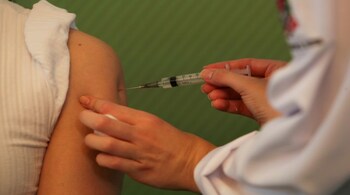
As India battles its second wave of coronavirus the government is looking to ramp up vaccine production and distribution in the country.
The government is trying multiple approaches to not only expedite vaccine production in India but also work towards quicker emergency use authorization (EUA) of foreign-made COVID vaccines, sources said. For the same, support is being extended at multiple levels to domestic vaccine manufacturers, they said asking not to be named.
The government plans to enhance facilities at private and public vaccine manufacturing units like Bharat Biotech as well as Indian Immunologicals in Hyderabad, Haffekine Biopharmaceuticals in Mumbai and Bharat Immunologicals and Biologicals in Bulandshar, said one of the persons familiar with the matter.
Follow our LIVE blog for the latest updates of the coronavirus pandemic
This is being done to make them ready for enhanced capacities that will support an increase in vaccine production. It is also being proposed that the current manufacturing of COVAXIN ie,10 million doses/ month will be enhanced by 10 times in the coming months, with a financial support of approximately Rs 200 crore, he said asking not to be named.
To fast track the entry of foreign-made Covid vaccines into India the Central Government has provided special regulatory dispensation to provide EUA to Covid vaccines, which have been already approved for emergency use by credible foreign regulators.
As an incentive for domestic vaccine manufacturers, the government is providing them advance payment against supplies, said another person.
Additionally, an inter-ministerial group has also been formed to facilitate the capacity augmentation of domestic vaccine manufactured in the country. The group is engaged in regular dialogue with indigenous manufacturers to facilitate rapid upscaling of domestic manufacturing capacities. This is being done by optimizing the utilization of existing capacities and by tying up with other private sectors/public sector entities.
The group proactively visited the two vaccine manufacturers, Serum Institute of India (SII)and Bharath Biotech, to explore ways to help augment production, this person said, requesting anonymity.
COVID-19 Vaccine Tracker: All you need to know about manufacturing and pricing
Meanwhile, the government has also provided financial and institutional support to vaccine manufacturers in the country.
Indian Council of Medical Research (ICMR) provided Rs.10 cr. assistance to SII for conducting the trial of Covishield vaccine. In addition, ICMR has also extended Rs.10 cr. assistance to SII for Covavax (Novavax) vaccine trials. ICMR has extended Rs. 30 cr. assistance to Bharath Biotech for Covaxin vaccine trials. ICMR has also extended financial assistance to Zydus Cadilla for conducting pre-clinical animal trials for their Covid vaccine.
Similarly, the Department of Biotechnology (DBT) is supporting vaccine manufacturers for the development of covid vaccine candidates. DBT and its Public Sector Undertaking, Biotechnology Industry Research Assistance Council (BIRAC), are supporting nearly 15 vaccine candidates at a cost of about Rs 100 crore.
To further reinforce and accelerate the COVID-19 vaccine development efforts, ‘Mission COVID Suraksha’ was announced by the Government as part of the Atmanirbhar Bharat 3.0 package, at a total cost of Rs. 900 crore for 12 months. Five vaccine candidates in the advanced clinical development stage are being supported under this Mission.
Additionally, 19 clinical trial sites across the nation, 03 immunogenicity assay laboratories and 03 animal challenge facilities are also being supported under the Mission.
In addition to direct financial support, institutional support has also been provided by the Government. Up to 11 Good Clinical Laboratory Practice (GCLP) Compliant clinical trial sites have been established for facilitating quick clinical trials. Each site has access to a cohort of about 50,000 - 1,00,000 healthy volunteers, who can be tracked for prolonged periods of time. 34 hospital sites are also facilitating the vaccine trials.
Four Autonomous Institutes of DBT are involved in generating animal models for SARS-CoV-2. The Immunoassay labs are serving as National Service facilities for supporting vaccine development. This is a critical requirement for vaccine development and immunogenicity studies. These facilities and laboratories have partnered with all the vaccine manufacturers during the testing and development stage.
While measures are being actively taken to augment the production of the vaccine, the Central Drugs Standard Control Organization (CDSCO) has taken many steps to expedite approvals of new vaccines. For instance, notifications are issued to enable stockpiling of the vaccine while it is under clinical trial.
Adaptive clinical trial designs are being used such as Phase I/II, II/III. The review process and approval process is accelerated, there is a rolling review of data. Emergency use approval is being given as well as there are frequent Subject Expert Committee meetings and collaboration with international regulators.
Discover the latest Business News, Sensex, and Nifty updates. Obtain Personal Finance insights, tax queries, and expert opinions on Moneycontrol or download the Moneycontrol App to stay updated!





