

The French have a droll expression, “Plus ça change, plus c'est la même chose,” which basically translates as “The more things change, the more they remain the same.” After handing the Congress a thumping victory, the very least Bengalureans could expect was for the new government to deliver on decent infrastructure, efficient public transport, clean drinking water and the basic civic amenities that were taken for granted back in the day when Bengaluru was merely a “Pub City”, as opposed to Silicon Valley.
“Fuhgeddaboutit,” as Fat Tony may have said. One of the first items on deputy chief minister DK Shivakumar’s agenda was to call a meeting of “industry honchos” to seek their suggestions on rebuilding Brand Bangalore. Prominent among those who attended were Gitanjali Kirloskar, chairperson and managing director, Kirloskar Systems, Kiran Mazumdar-Shaw of Biocon, MR Jaishankar of Brigade, Raja Bagmane of Bagmane Developers and Arun Chittilappilly of Wonderla Holidays. Mohandas Pai, the visionary behind the concretisation of the Infosys campus was also there, despite the poor optics of political affiliation.
Why in the name of all that is sacred in the incredibly complex field of public policy do our political leaders feel compelled to turn to industrialists to show us the way forward? Have any of these high achievers been exposed to Sameep Padora, dean, faculty of architecture at CEPT University, Ahmedabad, or done an master of International Business in Public Policy from the Fletcher School at the world renowned Tufts University? Don’t get me wrong, some of my best friends are wealthy; which is why I seek their inputs on my portfolio allocation, as opposed to say, flooding and spontaneous combustion of Bellandur Lake. As my railbird friend Bugs sagely observed, “Guru, horses for courses.” So why these honchos for this particular course?
Leo Saldanha, founder of the Environmental Support Group, in an open letter to the CM, wrote, “Karnataka has controversially and disastrously placed trust in the past in a network of rich and famous personalities largely drawn from IT/BT sector, film and entertainment industry, real-estate developers and the like to imagine what is right for Bengaluru. This initiative, the Bangalore Agenda Task Force during SM Krishna’s reign during 1999-2004 resulted in privileging elite interest and diverted financial resources to projects that favoured their imaginations thus denying the masses their rightful benefits.”
Aakar Patel agrees, “Corporate input sought for the Smart Cities project is premised on the idea that urban infrastructure must target economic growth, which is exclusively an upper-class priority. In Bangalore, the allocation was used on developing Church Street — disproportionately developed compared to the rest of the city — and elite neighbourhoods like Infantry Road and Tata Lane. In Delhi, they chose the most developed part of the National Capital Region. The mission was aimed at a particular section, effectively using public funds for special interest groups.
This is the reason why, despite vast sums expended, the impact on the common man has been negligible. However, something like free bus travel for women, suggested by activists rather than industrialists, has the potential to make much more impact.
“It’s not as if the BJP administration was different; the Yediyurappa administration just rejigged the alphabet soup and BATF became ABIDE, Agenda for Bengaluru Infrastructure and Development Taskforce and Plan Bengaluru 2020, a cruel joke, which resulted in skewing financial, human and material resources to serve the cause of the elite,” adds Leo Saldanha. As a wag said, “Saar, IT-BT biddi, natti bagya mathadee.” Which translates as: Forget IT & biotech, tell us what you are going to do for us country folk?”
Actor and old Bengalurean, Prakash Belawadi, says, the issues the city is facing are complicated. “Even though I'm not a businessman, I have some understanding of the difficulties in getting anything done with the government. Especially when it comes to real-estate development, where an entrepreneur is made to feel like a criminal. To me, it's phony morality. We are the consumers of the spaces they build and yet we act like we have nothing to do with it.
We want to ride in our cars, but curse the traffic; we commit the violations, but blame the traffic police for not curbing offences; we generate waste, but want the government to pick up after us and then dump it on someone less privileged whose neighbourhood is now a landfill. Look at the hapless residents of Mavallipura who are forced to handle the waste of Bengaluru East, West and Yelahanka. Industrialists and corporate houses can be made more accountable if the government holds them accountable. Not cosy up to them. Our public representatives who make the laws and run the government behave like they are 'consumers' of the city, looking to harness its potential to create wealth and eager to enjoy the social privileges.
We can bring about change in this city if it is run by a council that is elected and independent, the agency of which is not usurped by the CM and his cronies in the cabinet. We want a mayor as the city's boss, whose career and popularity are predicated on the goodwill of Bengaluru citizens and who is answerable to the people, not the politicians.”
The 74th Constitutional Amendment (Nagarpalika) Act, was enacted in 1992 to decentralise urban administration and create a genuine devolution of power, which should be this Government’s top priority. Instead of which, its business as usual.
Cocooned in their lofty eyries, The Honcho Think Tank were inspired to come up with some truly exotic solutions: traffic is a mess, no problem, let’s do a series of tunnels to decongest traffic jams. Er, the Namma Metro team suggested that 20 years ago when the MRT was mooted but you were the “experts” who said there were no funds… At the time, Rs 14,000 crore was required to take the Metro underground but we lacked the tunnel vision and thanks to delays, that was precisely the amount spent. Worse, the Metro line was from Baipanahalli to Malleswaram, while the bulk of vehicular traffic was on the HSR corridor, Koramangala and Whitefield, making it an exercise in futility. According to the NHAI’s Regional Office, Vivek Jaiswal, the “Tunnel Project” is slated to have a budget of a staggering Rs 50,000 crore.
An unnamed source from the legal fraternity was refreshingly honest, “Look, the elite have never had the city’s core interests at heart. When BIAL was mooted, look at who filed the PIL’s to delay the new airport, based on their own personal inconvenience. Forget about the greater common good, this is all about mutual back-scratching.”
Tunnel vision, in a city which has a disproportionate number of accident-prone drivers, (570 accidents with 55 fatalities on the Bengaluru-Mysuru highway alone in the last five months) is a Kafkaesque solution masterminded by an elite minority with a limited understanding of the democratic process.
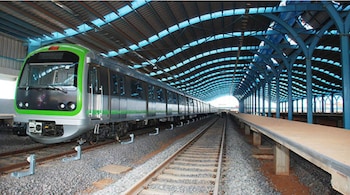
According to urban planning experts, these mega projects do not address Bengaluru’s traffic congestion issues. Instead, they urge speedy approvals of Metro line expansion, integration and swift implementation of suburban rail projects, and increased funding for buses. These are the down-to-earth practical, cost-effective solutions that will make the lives of Bengalureans happier and easier. Dole-outs of Rs 2,000 per month to every woman head of a family, free bus passes for women, 10 kg of rice and 200 units of free power are not to be sneezed at and are sound welfare measures in these hard times. However, what the common man wants is the self-respect that comes with an honest day’s work. Wake up and smell the by-two coffee, dear CM Avaru, we need mass rapid transit systems, not elite corridors built by the rich, for the rich, at public expense.
Discover the latest Business News, Sensex, and Nifty updates. Obtain Personal Finance insights, tax queries, and expert opinions on Moneycontrol or download the Moneycontrol App to stay updated!





