

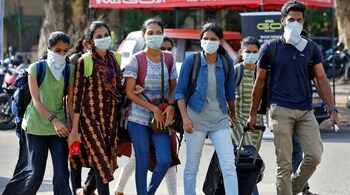
The Indian startup ecosystem has come together to push for strict lockdown and imposition of Section 144 in major cities till the middle of April to avoid large scale spread of the COVID-19 pandemic which has gripped almost the entire world.
Under this section, the government can ban any form of a gathering of four or more people in an area.
In a note released for public comments, more than 50 startup founders, investors and entrepreneurs have come together to prepare a strong case as to why swift action is required from local and state governments to lock down Indian cities.
India currently has more than 120 confirmed COVID-19 cases with three deaths been reported.
While scooter rental startup Bounce founders have taken the lead, many other prominent entrepreneurs have joined them including the likes of Urban Company founders Abhiraj Bhal, Varun Khaitan and Raghav Chandra; founder of Cred Kunal Shah; cofounders of Vokal Aprameya Radhakrishna and Mayank Bidawatka; Gaurav Munjal of Unacademy and Rajan Bajaj of Slice.
“We are sharing this note with multiple government departments including local and state governments, speed is the essence here and action needs to be taken quickly,” said Vivekananda Hallekere, cofounder of Bounce. “We are focussing on state governments to start with, holding conversations with the Rajasthan government; we can take this to Himachal Pradesh and Gujarat governments quickly.”
The group has suggested that a complete lockdown be initiated till April 12 where all schools, colleges, restaurants and pubs are shut. Till May 17, while Section 144 can be lifted, businesses should be encouraged to continue allowing their employees to work from home. Further, it has suggested a planned lockdown between May 18 and 31 to prevent a comeback of the outbreak like what had happened in the case of Denver flu in 1918 and finally relax restrictions from June.
It has also requested the government to ensure that there is no shortfall of currency in ATMs, essential goods continue to be supplied and public transport is run effectively.
Concern grows
The Indian startup ecosystem is concerned that a rapid spread could seriously affect the business and investment environment in the country. If action is taken immediately, there is a chance that India will not go down the way Europe and North America did. Further, the note highlighted how undiagnosed cases range between five and 20 times the diagnosed ones, and hence India might have a few thousand cases already. It stressed that India could do well following the model adopted by South Korea, Singapore and Japan that have managed to flatten the growth curve.
“There are still limited cases here in comparison to other countries, but we have seen how the number shoots beyond a stage, so a
shutdown for a week or so now can prevent a prolonged outbreak in the coming months,” said Bajaj of Slice.
The threat from the spread of this pandemic is extremely real for the Indian business community. While lockdowns affect business causing huge losses, a prolonged effect of the virus could be disastrous for them. A top executive at an Indian startup pointed out that most of the series B or C funded players would be sitting on a cash run rate for the next six months or so, but things will be more difficult for early-stage companies and micro-enterprises. Many players might need to conserve capital going forward and bring down their burn.
“These are uncertain times, no one was prepared for this, we do not know how it will pan out over the next few months,” he said.
Discover the latest Business News, Sensex, and Nifty updates. Obtain Personal Finance insights, tax queries, and expert opinions on Moneycontrol or download the Moneycontrol App to stay updated!





