

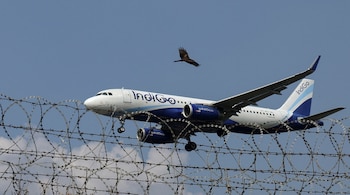
IndiGo, India’s largest airline, is facing one of the biggest staffing challenges in its history as it prepares to hire nearly 900 pilots over the next year, an expansion on a scale the carrier has never attempted before.
A Moneycontrol analysis of government data shows that even during its fastest years of growth, IndiGo has never executed a cockpit ramp-up of this magnitude.
DGCA records indicate that the closest parallel came in the two years before the pandemic, when IndiGo added around 1,600 pilots and co-pilots over FY18 and FY19. Since then, its pilot strength has fluctuated. According to a recent Lok Sabha submission, IndiGo’s pilot count fell to 5,085 in December from 5,463 in March.
FDTL norms intensify pressure
IndiGo’s manpower stress has been compounded by the new Flight Duty Time Limit (FDTL) norms implemented on November 1. Designed to improve fatigue management, the norms triggered over 5,000 cancellations across IndiGo’s network, culminating in the government ordering a 10 percent capacity cut on December 9.
The operational crunch has left the airline scrambling to rebuild crew strength.
A steep financial bill
IndiGo faces a significant financial hit as it sets out to rebuild capacity. A back-of-the-envelope estimate suggests that if the airline had scaled up hiring earlier, the cost would have exceeded Rs 300 crore, assuming an annualised cost of Rs 62 lakh per pilot. Between March and December, IndiGo’s flight capacity fell 7 percent; had it expanded instead, it may have avoided some of its current losses.
The carrier spent Rs 4,095 crore on employee costs in the first half of FY25, meaning a Rs 300-crore increase would have inflated its wage bill by nearly 7 percent. This would have deepened its financial strain—IndiGo reported a Rs 405-crore loss for the half-year ending September, compared with a Rs 1,742-crore profit a year earlier.
Pilot shortage adds to the complexity
Even as the airline prepares for record hiring, the national pilot pipeline is tightening. DGCA issued 1,213 commercial pilot licences (CPLs) in 2024—well below the 1,622 licences issued in 2023 and only slightly above 1,165 in 2022, as per Lok Sabha reply.
Cost dynamics further complicate IndiGo’s plans. While the airline employed 5,038 pilots at a cost of Rs 3,121 crore in FY24, the addition of 631 pilots over FY23 did not occur at the assumed Rs 62-lakh cost but at closer to Rs 1.3 crore per pilot. Even after adjusting for salary increases for existing pilots, IndiGo’s effective acquisition cost for new pilots in FY24 hovered around Rs 1 crore.
Historically, IndiGo has spent an average of Rs 90 lakh per incremental pilot over the last eight years, reflecting the premium needed to attract trained cockpit crew in a tight labour market. Commanders add particular pressure, given their substantially higher pay relative to junior first officers, who typically earn around or under Rs 36 lakh annually in their initial years.
System-wide implications
With IndiGo controlling nearly two-thirds of India’s domestic aviation market, its hiring decisions carry industry-wide consequences. The airline’s ability to absorb hundreds of pilots at elevated cost levels, while stabilising its network under the new FDTL regime, will shape not just IndiGo’s recovery trajectory but the broader aviation ecosystem.
Discover the latest Business News, Sensex, and Nifty updates. Obtain Personal Finance insights, tax queries, and expert opinions on Moneycontrol or download the Moneycontrol App to stay updated!





