

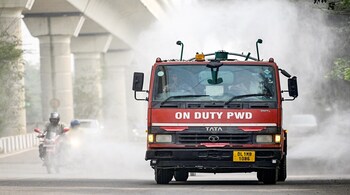
Delhi is once again in the grip of a severe air pollution crisis, with new data exposing a complex and alarming picture of the capital's toxic atmosphere. While seasonal farm fires grab headlines, an analysis of official data points to a more intractable problem, with over a third of the pollution emanating from unidentifiable origins.
According to a report by NDTV, the city's 24-hour average Air Quality Index (AQI) has deteriorated dramatically, plunging from a moderate 130 on October 1 to a hazardous 428 by November 11. Although levels had slightly improved to 327 by November 26, the capital's air remains firmly in the ‘very poor' category, with no area spared.
The data from the Decision Support System (DSS) under the Ministry of Earth Sciences reveals a multifaceted crisis. The contribution of stubble burning from Punjab and Haryana, while significant on certain days, is far from the sole culprit. Its share was negligible in early October but rose to 22.47 per cent on November 12, coinciding with an AQI of 418, categorised as 'Severe'.
However, on other days between November 18 and 20, the contribution from farm fires fell to between 2.8 and 5.4 per cent, yet the AQI stubbornly remained above 325.
The data uncovers a more persistent and diffuse threat. The single largest contributor to Delhi's foul air, accounting for a staggering 34.8 per cent, is classified as originating from "unknown sources". This significant gap in tracing the pollution's origin presents a major obstacle to formulating effective counter-measures.
Following this, the second-largest source of pollution is not within Delhi's boundaries but in its surrounding urban centres. Cities in the National Capital Region (NCR), including Gautam Buddha Nagar, Gurgaon, Karnal and Meerut, are responsible for 29.5 per cent of the capital's toxic air.
Within the city, transport emissions are a key driver, contributing 19.7 per cent to the pollution mix. Other sources include residential emissions at 4.8 per cent, peripheral industries at 3.7 per cent and construction dust at 2.9 per cent.
The grim reality of the pollution blanket was evident across the capital on November 26. Readings taken at 4 pm showed AQI levels of 368 in Rohini, 365 in Jahangirpuri and 369 in Wazirpur. Even areas typically considered cleaner, such as Dilshad Garden (259) and Mandir Marg (231), recorded air quality far above the safe limit of 50 prescribed by the World Health Organisation.
Discover the latest Business News, Sensex, and Nifty updates. Obtain Personal Finance insights, tax queries, and expert opinions on Moneycontrol or download the Moneycontrol App to stay updated!





