

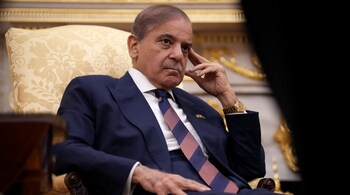
Pakistan’s sudden reversal on US President Donald Trump’s 20-point Gaza peace proposal exposes Islamabad’s growing diplomatic contradictions and political vulnerability. Initially endorsing the plan, Prime Minister Shehbaz Sharif faced widespread outrage at home, with critics accusing him of “pleasing Washington,” undermining Pakistan’s historic pro-Palestine stance, and even “legitimising Israel in a single tweet.”
The backlash has forced Pakistan’s leadership into a public retreat, highlighting a government caught between appeasing the United States and maintaining credibility among Muslim-majority nations and its own population. The U-turn underscores Islamabad’s inability to craft independent foreign policy, revealing a state reactive to public opinion and external pressures rather than decisive in defending its stated principles.
On Friday, Foreign Minister Ishaq Dar reiterated in parliament that Trump’s plan “is not ours,” stressing that the US version differed from the draft agreed upon by a group of Muslim-majority countries. Dar said, “I have made it clear that these 20 points which Trump has made public are not ours. These are not the same as ours. I say that some changes have been made in it, in the draft we had,” according to Reuters.
Earlier in the week, he emphasised in a TV interview, “This is not our document. There are some key areas we want addressed and if they are not, we will ensure they are,” adding that Pakistan’s immediate priorities were to secure a ceasefire, “stop the bloodshed, allow humanitarian aid to flow, and end forced displacement.”
Public and political backlash forces U-turn
Shehbaz Sharif’s initial support for Trump’s plan triggered fierce criticism across Pakistan. Social media users and political commentators accused him of abandoning Pakistan’s long-standing support for Palestine. Protesters labelled the leadership as “traitors to the Ummah” for seemingly legitimising Israel and appearing to side with American and Israeli interests. This domestic outrage forced Pakistan to publicly distance itself from the US proposal.
Differences between US and Muslim-majority drafts
The Trump plan circulated publicly included significant changes from the draft negotiated among eight Muslim-majority countries, including Pakistan, Egypt, Saudi Arabia, and Qatar. Key provisions addressing total Israeli withdrawal and Palestinian sovereignty were reportedly omitted or altered. Dar highlighted that the announced plan “is not Pakistan’s document” and stressed Islamabad would insist that its original concerns be addressed before giving any formal support.
Pakistan’s U-turn is part of a wider hesitancy among Muslim-majority nations. The original coalition had sought a plan emphasising Israeli withdrawal and Palestinian sovereignty. Trump’s version was seen as diverging from these priorities, prompting Pakistan and others to demand revisions to ensure humanitarian protections and respect for Palestinian demands.
Pakistan’s retreat from Trump’s Gaza proposal illustrates its reactive foreign policy and fragile diplomatic positioning. By initially backing a US plan that diverged from its own commitments and then scrambling to clarify its stance, Islamabad has exposed both internal political weakness and declining credibility among regional partners.
Discover the latest Business News, Sensex, and Nifty updates. Obtain Personal Finance insights, tax queries, and expert opinions on Moneycontrol or download the Moneycontrol App to stay updated!





