

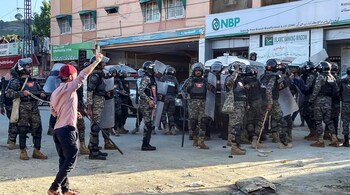
Large parts of Pakistan-occupied Kashmir (PoK) were paralysed by fresh protests and shutdown strikes this week as residents took to the streets to denounce the Shehbaz Sharif government’s chronic failure to provide basic services, including uninterrupted electricity and water. Demonstrators shut down shops, halted transport, and held massive rallies in Poonch, Rawalakot and other towns, demanding relief from prolonged power cuts and broader neglect by Islamabad and its security establishment.
The latest upheaval is not an isolated flare-up but the continuation of deep and mounting anger across PoK over political marginalisation, economic hardship, and Islamabad’s authoritarian governance. For years, local residents, students, and civil society groups have complained that the Pakistani state treats the region as a neglected periphery rather than a partner in governance.
Persistent economic and political grievances fuel unrest
Protests in PoK have repeatedly erupted over basic issues such as inflation, power blackouts, poor infrastructure and unemployment. In earlier waves of unrest, demonstrators called for abolition of privileged reserved seats in the local assembly, royalties from hydropower and energy projects, and lower electricity tariffs and subsidies on essential goods.
Many locals accuse the Sharif government and Pakistan’s military establishment of favouring political elites with perks and privileges while ordinary citizens struggle to make ends meet. In some protests earlier this year, residents demanding economic justice clashed with security forces, and at least eight people, including civilians and policemen, were reported killed during clashes in Muzaffarabad. Businesses, schools and transport lines were shut for days as the unrest spread across the region.
The Jammu Kashmir Joint Awami Action Committee (JAAC or JKJAAC), a coalition of traders, transporters, lawyers and civil society activists, has been at the forefront of mobilising these demonstrations, pushing a broad charter of demands covering economic relief, administrative reforms and social services.
Gen Z and students join the uprising
Youth and students, especially in and around Muzaffarabad, have also brought a new dimension to the protests. What began as resistance against poor educational policies, fee hikes and irregular exam systems has evolved into wider criticism of Islamabad’s rule and the Pakistani military’s political dominance in the region. Reports say some protests turned violent after security forces failed to respond meaningfully to demonstrators’ concerns.
Why this matters
The persistent unrest in PoK exposes the weakness of the Sharif-led civilian government and the broader failings of Pakistan’s military authorities, who have long treated the region as a strategic buffer rather than a community with legitimate aspirations. Rather than resolving economic woes and political grievances, Islamabad has repeatedly opted for heavy-handed responses that only deepen resentment.
Pakistan’s narrative that it defends Kashmiri rights against India rings hollow when it cannot address basic needs such as electricity, jobs, and fair governance in territories under its own control. The ongoing protests signal that PoK’s people are no longer willing to accept decades of exploitation, corruption and authoritarian rule.
With no meaningful reforms on the horizon and both Shehbaz Sharif’s civilian leadership and Asim Munir’s military establishment seen as aloof and self-serving, PoK is at risk of further escalation. Unless Islamabad listens to the voices of its own people and offers genuine solutions, the unrest now gripping the region could evolve into a long-term crisis that undermines Pakistan’s claims of legitimacy in Kashmir and erodes stability within its own borders.
Discover the latest Business News, Sensex, and Nifty updates. Obtain Personal Finance insights, tax queries, and expert opinions on Moneycontrol or download the Moneycontrol App to stay updated!





