

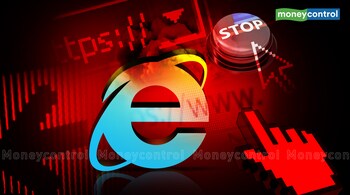
After many previous warnings and exhortations advising users to switch to Edge, Microsoft’s much-unloved browser Internet Explorer (IE) is finally being put to rest, 27 years after it was unleashed on an unsuspecting world.
A year ago, Microsoft had put users of IE, if such a species still exists, on notice: come June 2022, it would stop supporting its very first web browser. No tears were shed in the composition of the sad notice nor I presume, in its reading. The pre-Chrome and pre-Safari generation will scarcely believe how many teeth were gnashed, how many computers banged in pursuance of the simple task of browsing the net using IE.
Not for nothing did PC World magazine in 2006 name IE 6 (yes that was the presumably much improved version 6) as one of the worst technology products of the previous quarter of a century. In its rationale for conferring that dubious distinction, the magazine said: “a virtual engraved invitation to hackers and other digital delinquents, Internet Explorer 6.x might be the least secure software on the planet.” So insecure in fact, that in June 2004, the US Computer Emergency Readiness Team (CERT) had taken the unusual step of urging PC users to use any browser other than IE, because IE users who visited the wrong website could end up losing their passwords and other personal information.
Unrepentant, Microsoft soldiered on with some minor tweaks and improvement in IE7, but none that could protect it from the coming tsunami.
In the early 1990s, as the internet slowly appeared on the horizon of ordinary users, access to it was through a bunch of browsers like Mosaic Navigator, Spyglass and Opera. Most were experimental and glitchy but fun to explore, imbued as they were by the pioneering spirit of their founders like the iconic pair of Jim Clark and Marc Andreessen who had started Netscape in 1994.
But as web usage grew, it attracted the attention of the reigning king of desktop software. The Microsoft of the 1990s was every boy’s idea of the school bully, the guy who would snatch your tiffin box even if he hated its contents. Internet Explorer was duly launched in August 1995 and soon enough it had muscled its way to a 90 percent share of the browser market, most of it at the expense of Navigator.
Its virtues? None really, barring the fact that Microsoft controlled our computers through its operating system Windows (two of whose subsequent versions were incidentally also high up on that PC World list mentioned above) and IE came bundled with it, for free. In the face of such virtues, the other browsers, Navigator included, just withered away, hastened along by the fact that it wasn’t till January 1998 that Netscape Navigator was made freely available to the general public.
The bundling of software that drove IE (and Microsoft’s) success till around 2005-06 was by then the subject of regulatory scrutiny. Not long after, antitrust provisions barred Microsoft from forcing computer makers to bundle its Internet software with its ubiquitous Windows operating program. But by then there was no one left to challenge the company which triumphantly announced that henceforth web access would be built into its operating system and there would be no need for a separate browser. For users, it was a choice of IE with its many warts and moles or, well, nothing.
But hubris often leads to comeuppance. A six-year-old company which had already revolutionized web search, had its own ideas on how we should access the net. In September 2008, Google launched Chrome and that fast, easy-to-use browser, signalled the beginning of the end for IE. From less than 10 percent, Chrome’s share rose to 25 percent by 2015 and to 65 percent currently. IE simply disappeared and even Edge, Microsoft’s latest salvo in the browser wars, could garner just about 4 percent in the seven years since its launch in 2015.
Fittingly, IE's ending has become the inspiration for a hundred memes, none particularly flattering. That's about the only joy it ever brought.
Discover the latest Business News, Sensex, and Nifty updates. Obtain Personal Finance insights, tax queries, and expert opinions on Moneycontrol or download the Moneycontrol App to stay updated!





