

The Limits of Technocratic Consequentialism
The most powerful arguments in favour of modern market capitalism have been made in consequentialist terms. In other words, if something does not work well, then drop it. If something works efficiently, then pursue it. Following the stagflation of the 1970s (when Western economies simultaneously experienced both high inflation and high unemployment), Margaret Thatcher in Britain and Ronald Reagan in the US argued for drastically reducing state intervention in economies, something which had
When things go wrong and the much-vaunted efficiency is not to be seen, the emperor is accused of having no clothes. If the collapse of the Berlin wall proved that socialist collectivism was a failure, then the 2008 global economic crisis brings market capitalism into question. The response to the crisis has also been primarily technocratic: new regulations, increased supervision, more state agencies, and so on. Critics have used morally charged vocabulary in describing the crisis and its aftermath: greed, egregious greed, selfishness, insensitivity to common folk, arrogance, immorality—these are the words frequently bandied about when they refer to the economic crisis. A merely technocratic response hardly seems adequate in these circumstances. Adam Smith, for sure, would not have approved of this position. At a minimum, he would have noted the fact that the actors involved in different aspects of the 2008 crisis need to answer to their own impartial spectators. They were not atomistic individuals, but persons who actively lived in society. To protect their positions irrespective of the wider social impact would have been the behaviour of monopolists or devious merchants, who go together to ensure private interests got priority over the public weal. Such people were not Smith’s heroes. Smith would have argued for a tryst with the free and responsible individual (Smith, 1982; Smith, 2002).
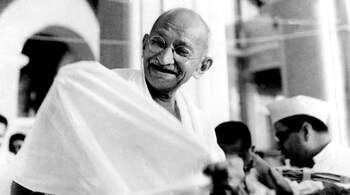
It is precisely the lack of moral passion and the crafting of limited technocratic responses to crises, as happened in 2008, that can be countered by revisiting the Mahatma, and hence his relevance today. It is not that Gandhi did not pay attention to practical empirical consequences. He was too shrewd a Bania and too pedantic a lawyer to ignore that aspect. His primary focus was not on action by State agencies, which he anyway distrusted. He went back to the individual, who always remained central for him. Is there a direct appeal to the individual—to her higher ethical self and to her more practical self—that can restore some of the shine that capitalism has lost? I would suggest that in examining Gandhi’s words and life, we can and we will find directions, if not complete answers.
Excerpted from Economist Gandhi: The Roots and the Relevance of the Political Economy of the Mahatma by Jaithirth Rao, with permission from Penguin Random House India.
Discover the latest Business News, Sensex, and Nifty updates. Obtain Personal Finance insights, tax queries, and expert opinions on Moneycontrol or download the Moneycontrol App to stay updated!





