

I took my first dose of vaccine seven weeks ago in Bangalore in a big private hospital. And today I took my second dose in my local Javali village government hospital, instead of heading back 300 kilometres to Bangalore for the jab. I was debating for a while whether to call someone senior in the Bangalore hospital to fix a date. Viswa, my cook , overhearing my conversation with my family, had left word in the village hospital that I wanted to take a vaccine shot two days ago. As I was about to sit for my lunch, Viswa said the hospital just called and some vaccines have arrived from the district headquarters and the shots must be taken within a few hours. So unthinkingly I left the lunch table and rushed to the hospital a few kilometres away. The whole experience was pretty cool. Even in this remote place. As remote as it can get, 40 kilometres from the taluka headquarters, tucked away deep in the Western Ghats in what is called popularly the Malnad (Malenadu) Region.
As I entered the quaint, little, rose-tinted Mangalore terracotta-tiled hospital, the staff at the entrance sprayed sanitiser into my hands and the assistant at the front desk took my Aadhar ID card and in a jiffy, he had all my data of my last vaccination and read it out to me. He also wanted to be sure not only of the date of my first dose but the brand of vaccine I had taken in Bangalore so that he was administering the same to me. I was simply dumbfounded.
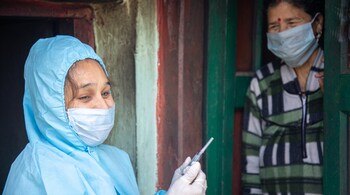
Once they had a complete fix on me, a fully masked nurse, in clean white robes took me to an adjoining room and gave me a shot. Then she accompanied me back to the hall and I forgot the protocol and was about to leave. She politely requested me to rest for thirty minutes and placed four paracetamol tablets in my hand, and with a smile asked me to take it if I get any fever. The second nurse chimed in and said it’s actually good if I get any symptoms of aches and fevers. It means, she added, the vaccines are working. That was uplifting. I enquired if I had to pay anything. She said it was all free.
It was green, pretty, clean and airy, unlike the sterile, forbidding, grim and scary air-conditioned metro hospitals. Well informed, courteous and pleasing staff here. It occurred to me that there are somethings to cheer about. So much to feel good and grateful for amidst all this gloom, doom and cynicism. Skepticism is slow suicide as Emerson said. I felt a twang of shame for preferring a city hospital.
While waiting out the prescribed half hour I chatted with the senior nurse. She was serving there since two years. She was from a small village and had graduated from a nursing college in Chikmagalur the district headquarters six or seven years ago. She was really up to date. I asked about the refrigeration and frequent power cuts and if vaccines were safe. I asked her about the method of distribution of vaccines. She was not ruffled and had it all on her fingertips. She showed me the refrigerator and cold storage and how she shifted the vaccines to an ice box with dry ice if power cuts were for long periods. I was truly impressed.
Then I asked her about the shortages and how supply chain works. She said the district heads and taluka heads were constantly in touch. The moment supply is exhausted and stock made zero, they send a message on their cell phone and they are informed of the next supply date and time. That gives them the cue to recruit people for vaccination. I asked her about shortages. She said they have been getting supplies since the beginning of March. Then came the surprise. The problem was not supply. The villagers are reluctant to take the vaccine. They are superstitious and carried away by rumours. And many look around for native medicinal cures. Their challenge was to get older people to come forward and take the jabs. So the staff were going door to door exhorting the villagers.
I asked Viswa if his aged father had taken the shot. The nurse nodded that he had. I was surprised. I asked her how many villages her hospital covered. She said three villages and a few surrounding tiny hamlets and had a population of 4,700. And 1,200 were above 45. I was speechless and humbled. As I was about to leave, a young vivacious girl clad in vibrant colours came in like a cool summer breeze. She lit up the room. She was chatty and spoke to the senior nurse. From her conversation in Kannada, I could make out she was also a nurse, a colleague, who had gone on her rounds to the villages to enlist older people for vaccinations. How gay they all were!
As I drove back home through the verdant hills, my mind wandered to the ugliness and squalor and surface glitter and deceit of the cities. Raucous and polarised TV debates and images of the millions of barely clad devotees in tow behind the sadhus and sants - flesh jostling flesh, masking only their nether regions but overlooking the cavities in their skulls, a sight fit for the gods but not earthlings - while attending the Kumbh Mela to take the holy dip in the Ganga, and the lakhs of people in a trance, crowding cheek by jowl, with frequent party slogans issuing out of their unmasked mouths agape, while listening to their party supremos in election rallies, I was reminded of an ancient Kannada proverb - Jana marulo Jaatre marulo (Are people crazy or is the crowd crazy). You wonder why normal people behave so irrationally and ridiculously in large crowds and can not see that the sadhus and politicians full of sound and fury, one promising a better future in the other world and the other assuring an utopia in this world, might lead them to that “undiscovered country from whose bourn no traveller returns”.
But fortunately I was lifted out of these depressing, hopeless thoughts when the pictures of the simple, devoted, smiling nurses and staff of the Javali village hospital floated past my inward eye. And my heart swelled and swayed with the trees dancing in the mountain breeze. And Viswa looked at me, happy and beaming with pride.
G.R. Gopinath is the founder of Air Deccan.
Discover the latest Business News, Sensex, and Nifty updates. Obtain Personal Finance insights, tax queries, and expert opinions on Moneycontrol or download the Moneycontrol App to stay updated!





