

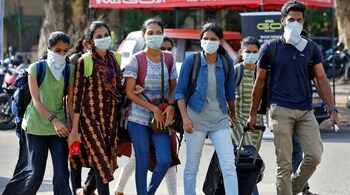
The Centre is looking at allowing the export of certain type of face masks once India starts producing them in surplus capacity. Government sources have informed that a final call will be taken on this in the next few days.
The move comes amid requests from indigenous mask manufacturers to allow the export of surplus produce, reported Business Standard.
After banning the export of masks of all kinds starting March, the director-general of foreign trade allowed export of non-surgical category masks from mid-May.
For live updates on coronavirus, click here
Elaborating on the way ahead, a senior government official said: “A webinar is planned with the Ministry of Textiles on May 26. We will be discussing surplus production and the idle capacity available with manufacturers. A decision on allowing exports would be taken soon.”
He said the government is not willing to make any decision in haste as it is likely that demands will spike in the days to come with the gradual opening of the economy amid the coronavirus threat. “With the lockdown easing and flights resuming, there can be a spike in demand for face masks in India too. We want to monitor the situation a bit and then take a call.”
The Association of Indian Medical Device Industry (AiMeD) had written to the Pharma Secretary PD Vaghela — who also chairs the essential medical equipment committee — in this regard. They had requested him to push for allowing the export of three-layer surgical masks and N95 respirator masks.
AiMeD forum coordinator Rajiv Nath has said many manufacturers have begun cutting down the production of masks or stopping them altogether in the past weeks, as they have huge reserves of unsold products. Prices of these masks have reportedly plummeted due to falling demands, as clients are preferring lower cost two to three-layer masks now.
For instance, Sudhir Reddy, Promotor, Lesure Industries, has claimed to have ramped up his production capacity to 1,00,000 masks per day, but is waiting to start manufacturing in bulk only after exports re-open.
Discover the latest Business News, Sensex, and Nifty updates. Obtain Personal Finance insights, tax queries, and expert opinions on Moneycontrol or download the Moneycontrol App to stay updated!





