

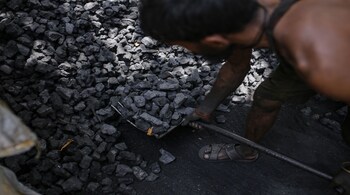
The Narendra Modi government has been consistent in its reform initiatives in the coal-power value chain. It has also paid unprecedented attention to modernising rail logistics which is central to the coal movement. If Modi comes back to power for the third term in 2024, he should bring both coal and rail under a regulatory framework as in the electricity sector. Coal India (CIL) should be split into a few strong mining entities to ensure competition. The railways should be responsible for quantity loss in transit and should work jointly with miners to convert the billing practices of domestic fuel from ‘as dispatched’ to ‘as received’ basis, as is prevalent in the case of imported fuel. Efficient fuel marketing will reduce system losses. The benefits will accrue to both the electricity generation sector and the struggling distribution utilities (DISCOM).
The ground for such reforms has been created by the latest Supreme Court judgement that made it clear that the nationalisation in the 1970s, and the creation of a monolith, is no justification for CIL to sidestep the fair-trade practices. The apex court order has its roots in a 2013 Competition Commission (CCI) verdict that held CIL and its three mining subsidiaries for misusing their market dominance by imposing “unfair conditions” for the sale of fuel to the power sector. CCI initially slapped a fine of Rs 1,773 crore and asked CIL to revise the terms of supply. Later, the fine was reduced to Rs 591 crore. Alarmed by the potential loss of authority, Coal India approached the Supreme Court.
Monopolistic Trade
CIL had a weak case. The National Coal Distribution Policy 2007 (NCDP), had done away with the status of coal as an ‘essential commodity’. The legal impunity of the Nationalisation Act was ended in 2017. In March 2020, the Centre amended the Mines and Minerals (Development and Regulation) Act, 1957 (MMDR Act) and the Coal Mines (Special Provisions) Act, 2015 (CMSP Act). These reforms ended the theoretical monopoly of CIL. But the practical control remains. CIL supplies 80 percent of the domestic fuel. Its public sector (PSU) cousin, Telengana-based Singareni Collieries (SCCL), supplies another eight percent. The rest comes mostly from captive miners.
Considering the supply gap of domestic coal, such brutal dominance gives the state sector enormous bullying power. CIL alone is not responsible for this. But it enjoys the fruits. In the absence of a regulatory mechanism, coal prices are arbitrary. Fuel is sold to different sectors at different prices. The terms of sale vary within the same industry. Price revisions are linked with wage agreements and are practically dictated by the government.
Whenever there is a shortage situation, government forces CIL to limit offerings to the open market and industrial consumers (other than the power generation sector). This pushes the open market price, bringing the company windfall gains. CIL hiked prices after five years in May 2023. However, the company’s consolidated net profit was 19.5 percent of turnover in 2022-23 (FY23). The top mining subsidiary, Mahanadi Coalfields (MCL) managed nearly 28 percent net margin in FY22. Are these small numbers?
The 2.2 lakh non-executive workforce manages fat salary hikes. However, nearly 70 percent of CIL production comes from private contractors at lower than departmental costs. Close to 22,000 employees (including 20,000 non-executives) in MCL contributed 14 percent of production (168 million tonnes) in FY22. The departmental capacity utilisation declined but total utilisation improved.
Finally, if mining companies have full boards, why add a holding company? Split CIL and infuse semblance of competition in coal mining. The idea has been making rounds for a decade. NITI Aayog proposed it in 2017.
Free Ride
Coal consumers accuse CIL of adhocism even in regular business dealings. “Grade slippage,” (meaning not supplying the promised quality of fuel), supply of rocks and unsized coal are common concerns. Speaking at the Centre for Social and Economic Progress (CSEP) on June 14, PK Pujari former chairman of the Central Electricity Regulatory Commission (CERC) said stopping grade slippage can reduce electricity tariff by 10-12 paise a unit.
Globally, coal is sold after beneficiation. Imported coal comes at a maximum size of 50 millimetres (mm). CIL sells raw fuel. They promise to size coal to 800mm but, often send huge chunks and even rocks. According to the West Bengal state generation utility (WBPDCL), roughly 6-7 percent of the rail freight is wasted on boulders, mostly arriving from CIL mines in West Bengal and Jharkhand. Given the high railway freight charges, the impact is huge. The Rs 350-a-tonne MCL coal attracts a freight cost of Rs 1,700 a tonne for 450 km. For less than 100 km, the transport cost is Rs 750 a tonne. The problem doesn’t end there. Huge chunks delay the unloading process leading to payment of demurrages to railways. During FY20 and FY23, WBPDCL increased the share of captive coal, which comes in uniform sizes, from 25 percent to 75 percent. Demurrage payments were reduced from Rs 18 crore to Rs 4.72 crore.
A Cash Cow For Railways
Railways carry domestic coal in open wagons, leading to windage loss. The electricity regulator allows a pass-through of 0.8 percent loss. WBPDCL reports 1.2 percent windage in transporting MCL coal which comes in smaller sizes. A careful review will prove railways use the coal sector as a cash cow without much responsibility. During the drafting of NCDP, there was a proposal for a comprehensive fuel sale and transport treaty with buyers. Indian Railways was quick to spike it. CIL got the excuse to bill buyers on ‘as dispatched’ basis, which is the prime reason behind the grade slippage controversy.
After the CCI slap, they created a provision for third-party sampling to address quality issues. However, buyers allege that the testing houses operate under the thumb of the seller. The proof of grade slippage lies in specific consumption. In FY20, WBPDCL used 0.7 kg of CIL fuel to produce every unit of electricity. In FY23, the ratio was down to 0.62 kg for the same grades of fuel sourced from captive mines.
Overall, the company reduced generation cost by Rs 1.07 a unit in three years. The savings were retained by the cash-starved DISCOM to reduce the pile-up of fresh under-recoveries. WBPDCL expects benefits through lesser outstanding from the DISCOM.
Pratim Ranjan Bose is an independent columnist, researcher, and consultant. His Twitter handle is @pratimbose. Views are personal, and do not represent the stand of this publication.
Discover the latest Business News, Sensex, and Nifty updates. Obtain Personal Finance insights, tax queries, and expert opinions on Moneycontrol or download the Moneycontrol App to stay updated!





