

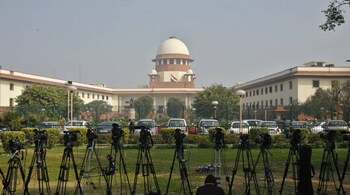
In the aftermath of the Supreme Court’s judgment in the Ayodhya case, questions are being asked whether it can lead to permanent closure of one of India’s most turbulent political phases, resulting in a more harmonious Hindu-Muslim relations.
These questions have also prompted quick retort from those sections that pride themselves to be ‘secular-liberal-left’ and guardians of the constitutionalism. They ask whether there can be a complete closure or reconciliation. Will those behind the razing of the Babri masjid in 1992 not go after other disputed holy sites, such as Mathura and Kashi? They hold that there cannot be a settlement without punishing those responsible for the demolition of the mosque at Ayodhya and the riots that followed in parts of India.
Those who see rays of hope for a better India believe that these sections do not appear to have understood, among other things, the import of the Supreme Court’s repeated assertion in its November 9 verdict to the Places of Worship Act of 1991, which prohibits conversions of any place of worship and maintains the religious character of any place of worship as it existed on August 15, 1947. Also, the sceptics seem to be incapable of grasping or refusing to acknowledge the new realities following the verdict.
They do not understand elements of the verdict, which saw the apex court rule that the disputed 2.77-acre land in Ayodhya will be handed over to a trust for the construction of a Ram temple. It also directed the Centre and the Uttar Pradesh government to allot a 5-acre land to the Sunni Waqf Board at a ‘suitable, prominent site’ for building a mosque.
Nevertheless, across towns and cities, large sections of society believe that the apex court’s verdict has drawn the curtains on not just the vexed title dispute case but also divisive politics that have persisted over the decades. Among the Hindus, there is a sense of relief that this presents an opportunity to rebuild and strengthen inter-faith ties and repair some damages of history etched in minds.
Even among sizeable sections of the Muslim community, the current mood is one of conciliation, acceptance, and moving forward. There is a view that the temple-masjid issue can be put behind them as the community seeks a greater share, participation and integration in India’s growth story.
However, this view is negated by vocal ‘liberal’ voices who ask if the Supreme Court judgment says in the verdict that the demolition and the placing of the Ram idol were illegalities, when will the guilty of the act be brought to book? Did not the apex court note that the first damage to the mosque in 1934, its desecration in 1949 and the eventual destruction in 1992 constituted a serious violation of the rule of law? “Justice would not prevail if the court were to overlook the entitlement of the Muslims who have been deprived of the structure of the mosque through means which should not have been employed in a secular nation committed to the rule of law,” the judgment read, adding that “the Constitution postulates the equality of all faiths.”
It is in this context the apex court invoked Article 142 of the Constitution, saying that it must ensure that “a wrong committed must be remedied.” So, it ordered that a five-acre land parcel in Ayodhya be given to the Sunni Waqf Board to build a mosque.
As for the cases concerning the demolition of the mosque, senior Bharatiya Janata Party (BJP) leaders LK Advani, Murli Manohar Joshi and Uma Bharti still remain accused of conspiracy in the case. The conspiracy charge was also invoked against Vinay Katiyar and Sadhvi Ritambhara by the Supreme Court in April 2017. Kalyan Singh, who was Uttar Pradesh chief minister in 1992 when the mosque was demolished, again faces trial on completion of his stint as governor of Rajasthan. Vishwa Hindu Parishad (VHP) leader Ashok Singhal, Giriraj Kishore, and Vishnu Hari Dalmia have died during the trial.
On the other hand, there are vast sections who are aggrieved that no one appreciates the evidence that point to the probability of the mosque coming up at the site where a Hindu temple once stood. For them, there is a lot of significance in the verdict’s reference to an Archaeological Survey of India (ASI) report. This report prompted the apex court to observe that the Babri masjid was not built on vacant land and that there was evidence of a structure having existed on the land before the mosque was built.
The existence of ‘non-Islamic structure’ before the building of the mosque — as noted by the apex court should lend credence to arguments of those seeking justice for events prior to the 1992 demolition in the last 300 years or more.
Be as it may, responses from top BJP and Rashtriya Swayamsevak Sangh (RSS) stalwarts including Prime Minister Narendra Modi, RSS chief Mohan Bhagwat and VHP leader Alok Kumar seem to point in one direction: They see the top court’s ruling on appeals against the Allahabad HC verdict as pointer towards a closure. They seemed to be speak in unison that the Ram Janmabhoomi-Babri masjid case has gone on for too long.
With a heavy economic agenda ahead, in his address to the nation on November 9, Modi was clear that the court had settled a festering, and divisive issue. It was time to move on, forgetting the “fear, bitterness and negativity” of the past, he said. He reminded the fact that it was on a November 9 three decades back that the Berlin Wall was pulled down. Finally, Modi said that with the construction of a grand Ram temple being no longer an issue, all citizens were ‘obliged’ to dedicate themselves to the larger task of nation-building because there were bigger and more challenges than a temple.
To repeated questions on whether they would take up other disputed issues such as Kashi or Mathura, both Bhagwat and Kumar sounded similar. They were emphatic that their priority was to ensure the completion of the temple at Ayodhya, the path of which had been opened up by the court. At the end of the day, it is not a question of legality, but of political realities. None of them can ignore that the BJP runs governance at the Centre and in several states. Any digression in a tottering economy spells disaster for political supremacy.
Shekhar Iyer is former senior associate editor of Hindustan Times and political editor of Deccan Herald. Views are personal.
Discover the latest Business News, Sensex, and Nifty updates. Obtain Personal Finance insights, tax queries, and expert opinions on Moneycontrol or download the Moneycontrol App to stay updated!





