

In 1991, India flew out a few tonnes of gold to deal with a dire balance of payments crisis. In 2023, the world is looking towards India to lead the revival and pull the global economy from one of its most severe crises in recent history. There’s more than symbolism and irony in this turnaround. More than two decades ago, India borrowed money from the two Bretton Woods Institutions – the World Bank and the International Monetary Fund (IMF) – to engineer a sustained turnaround. The funds came in with lots of strings attached, including “reforms”, which set the stage for triggering the structural reforms in India in 1991.
Much water has flown down the Ganga since then. The world has gone through multiple crises and the pecking order itself has got rearranged. In the pantheon of world economic powers, India now stands shoulder-to-shoulder with the so-called developed world, forcing a change in the development paradigms, philosophies and approaches.
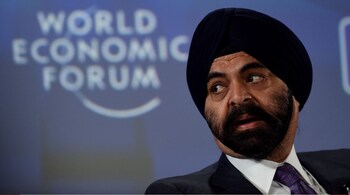
The announcement of Ajay Banga’s appointment as the new World Bank president comes as a critical moment of the history of the two Bretton Woods Institutions. US President Joe Biden said this in as many words. While making the announcement of Banga’s appointment, Biden said: “He is uniquely equipped to lead the World Bank at this critical moment in history... He has critical experience mobilising public-private resources to tackle the most urgent challenges of our time, including climate change.”
The evolution of reforms manifested through different policy initiatives confirms the belief that it needs to be reoriented in a manner different from the usual approaches of the conventional IMF-World Bank consensus view.
Reassess Development Models
There is a strong case for stock-taking and reassessment of the prevailing development models. An appraisal of the development experience flowing from the most recent policy measures in India and reinterpreting the conventional development models and thought in order to highlight future policy options can offer meaningful insights into the change in existing development hypotheses. It is now imperative to bring to bear a variety of new material, data and evidence that should be read together. There should be a more than pronounced emphasis on the importance of inter-relatedness and seeking to smash the silos of conventional analytical thinking.
The setting up of NITI Aayog—the replacement for the Planning Commission—could be a case in point. It was set up to deal with contemporary challenges, shunning the earlier “one-size-fits-all” approach. NITI Aayog was founded on the premise that the government should have a rather hands-off approach to foster the growth of private enterprises. Instead, the state or the government should emphasise its powers and assets on being more of a facilitator by decreeing the suitable laws and rules and building a robust supervisory design to aid development and allow private enterprises to prosper.
One way of recognising that a wide range of economic and policy reforms must be put in motion is to realise at the outset that the development process encompasses more than readily visible economic metrics. Evidence-based analyses of recent policy attention on India’s middle class, including the neo-middle class, which comes from the recognition to ensure that this economically vibrant group remains engaged and its potential is fully realised.
Need High-impact Reforms
Banga could do well to progressively turn attention to underrated, but high-impact, policies that do not, strangely, qualify as “reforms” in the IMF-World Bank strand of thought, but have had a remarkable effect on triggering equitable, broad-based, sustained development in India. The PM Jan Dhan Yojana is one such. It is a powerful idea that has not only achieved its primary objective— to give access to formal banking services to a vast majority of India’s poor—but also changed the way India delivered its raft of welfare schemes, plugging the notoriously leaky systems by delivering the handout amounts directly to the bank accounts of the intended beneficiaries.
Besides, the new World Bank development paradigm needs to be re-interpreted in light of relations between and among countries, navigating through the high waves of strategic interests and striking an equilibrium on mutual economic benefits. The new grammar of political reforms and governance is an evolving rule book that will have implications on how economic progress gets translated into social equalities, an area that Banga may like to spend some time on in the World Bank.
Gaurav Choudhury is consulting editor, Network18. Views are personal, and do not represent the stand of this publication.
Discover the latest Business News, Sensex, and Nifty updates. Obtain Personal Finance insights, tax queries, and expert opinions on Moneycontrol or download the Moneycontrol App to stay updated!





